What Is a Sourdough Starter?
A sourdough starter is a mixture of flour and water that captures wild yeast and bacteria from the air and the flour itself. Over about a week of daily feeding, these microorganisms establish a stable colony that can leaven bread — no commercial yeast needed.
It sounds more complicated than it is. You mix flour and water once a day for about a week. That's it. People have been doing this for thousands of years.
💡 Why a scale?
Flour packs differently every time you scoop it, so “1 cup” can vary by 30% or more. A scale removes all guesswork. If you don't have one, use the spoon-and-level method: fluff the flour, spoon it into the measuring cup, and level with a knife.
Day by Day
Day 1: Mix
Combine 50g whole wheat flour (or rye) and 50g water in your jar. Stir until smooth — it should look like thick pancake batter. Mark the level with a rubber band, cover loosely (not airtight), and leave it at room temperature.
Day 2: Wait
Don't do anything. Just check on it. You might see some small bubbles starting to form. You might not. Both are fine. Let it sit for a full 24 hours.
Day 3: First Feed
You should see some bubbles and maybe a slight rise. Discard about half the starter (just toss it — you'll have plenty soon). Add 50g all-purpose flour and 50g water. Stir, mark the level, cover, and wait another 24 hours.
Days 4–6: Keep Feeding
Repeat the same process every 24 hours: discard half, add 50g flour + 50g water, stir, mark, cover. Around day 3–4, you might notice a burst of activity — lots of bubbles, a big rise, maybe a sour or funky smell. This is normal but misleading. It's usually from leuconostoc bacteria, which are the early colonizers but won't stick around. The starter might go flat after this burst. Don't panic. Keep feeding.
⚠️ The day 4 fake-out
Almost everyone thinks their starter is ready on day 3 or 4 because of this initial burst. It's not ready yet. The real sourdough yeast and lactobacillus bacteria take a full week to establish. Be patient.
Day 7+: Ready?
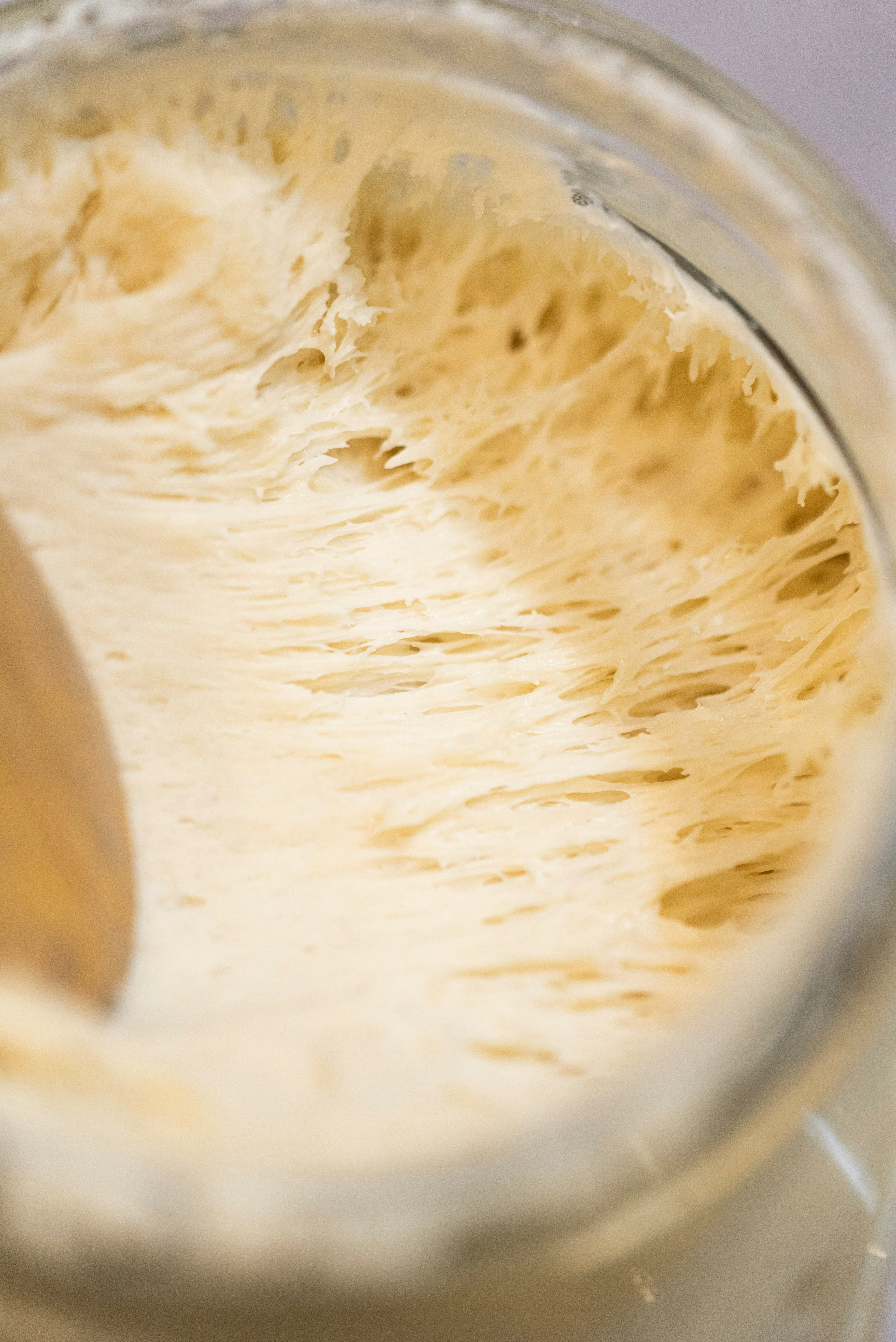
By day 7 (sometimes a few days later), your starter should reliably double in size within 4–6 hours of feeding. It'll smell pleasantly sour — like yogurt or mild vinegar, not like nail polish or rotting food. When it passes the “float test” (drop a spoonful into water — if it floats, it's active enough to leaven bread), you're ready to bake.
Ongoing Maintenance
Once your starter is established, you have two options depending on how often you bake:
If you bake weekly or more
Keep it on the counter and feed it once a day (same ratio: discard half, add equal parts flour and water). Feed it the night before you plan to bake, and use it 8–12 hours later when it's at peak activity.
If you bake less often
Store it in the fridge. It slows way down in the cold and only needs feeding once a week. The night before you want to bake, take it out, feed it, and let it come to room temperature and fully activate (8–12 hours). You might need to feed it twice to wake it up if it's been sleeping for a while.
Sourdough Starter Feeding Ratio — What Works
The feeding ratio is how much old starter you keep versus how much fresh flour and water you add. Different ratios produce different fermentation speeds and flavor profiles. All ratios are written as starter : flour : water by weight.
| Ratio | What It Means | Best For |
|---|---|---|
| 1:1:1 | Equal parts starter, flour, water | Daily baking, active maintenance at room temp |
| 1:2:2 | Double the flour and water | Slightly slower rise, good middle-ground flavor |
| 1:5:5 | Five times the flour and water | Fridge storage, 12–16 hour peak, milder flavor |
For most home bakers, 1:1:1 (50g starter + 50g flour + 50g water) fed twice daily at room temperature is the gold standard. If you bake less frequently, a 1:5:5 ratio fed once daily keeps things slower and more manageable. The key is consistency — pick a ratio that fits your schedule and stick with it for a week before judging the results.
Why Isn't My Starter Rising?
This is the most common sourdough frustration, and it almost always has a fixable cause. The short answer: give it more time, warmth, and consistent feedings.
- Temperature too low — starters need 75–80°F (24–27°C) to be active. In a cold kitchen, try the oven-with-light method or the top of the fridge.
- Wrong flour — bleached all-purpose flour has fewer wild yeast nutrients. Switch to unbleached flour or add a spoonful of whole wheat or rye flour to boost activity.
- Too much discard — keeping too little old starter dilutes the microbial colony. Keep at least 25–50g before feeding.
- Chlorinated tap water — chlorine inhibits fermentation. Use filtered water or let tap water sit uncovered overnight.
- Starter is just young — most starters need 7–14 days before reliably doubling. The Day 3–4 burst of activity is a false alarm (see the tip above).
For a complete breakdown of every possible starter problem, see our sourdough starter troubleshooting guide.
Troubleshooting
For a full breakdown of every common sourdough starter problem, see our sourdough starter troubleshooting guide.
It smells like acetone or nail polish
Your starter is hungry. This happens when the bacteria run out of food and start producing acetic acid. Feed it more frequently (every 12 hours instead of 24) for a day or two and it'll mellow out.
Dark liquid on top
That's called “hooch” — it's alcohol produced by the yeast when the starter is hungry. Pour it off or stir it in (stirring it in makes the flavor more sour), then feed as usual. It's a sign you should feed more often or keep it in a cooler spot.
It's not doubling
Temperature matters a lot. Starters are happiest at 75–80°F (24–27°C). In a cold kitchen, things move slower. Try putting it on top of the fridge, near (not on) the stove, or in the oven with just the light on. Also make sure you're using unbleached flour — heavily bleached flour has fewer nutrients for the microorganisms.
I forgot to feed it for a week
If it was in the fridge, it's almost certainly fine. Take it out, discard all but a tablespoon, feed it, and give it 2–3 days of regular feedings. It'll bounce back. Starters are remarkably resilient. People have revived starters after months of neglect.
What About the Discard?
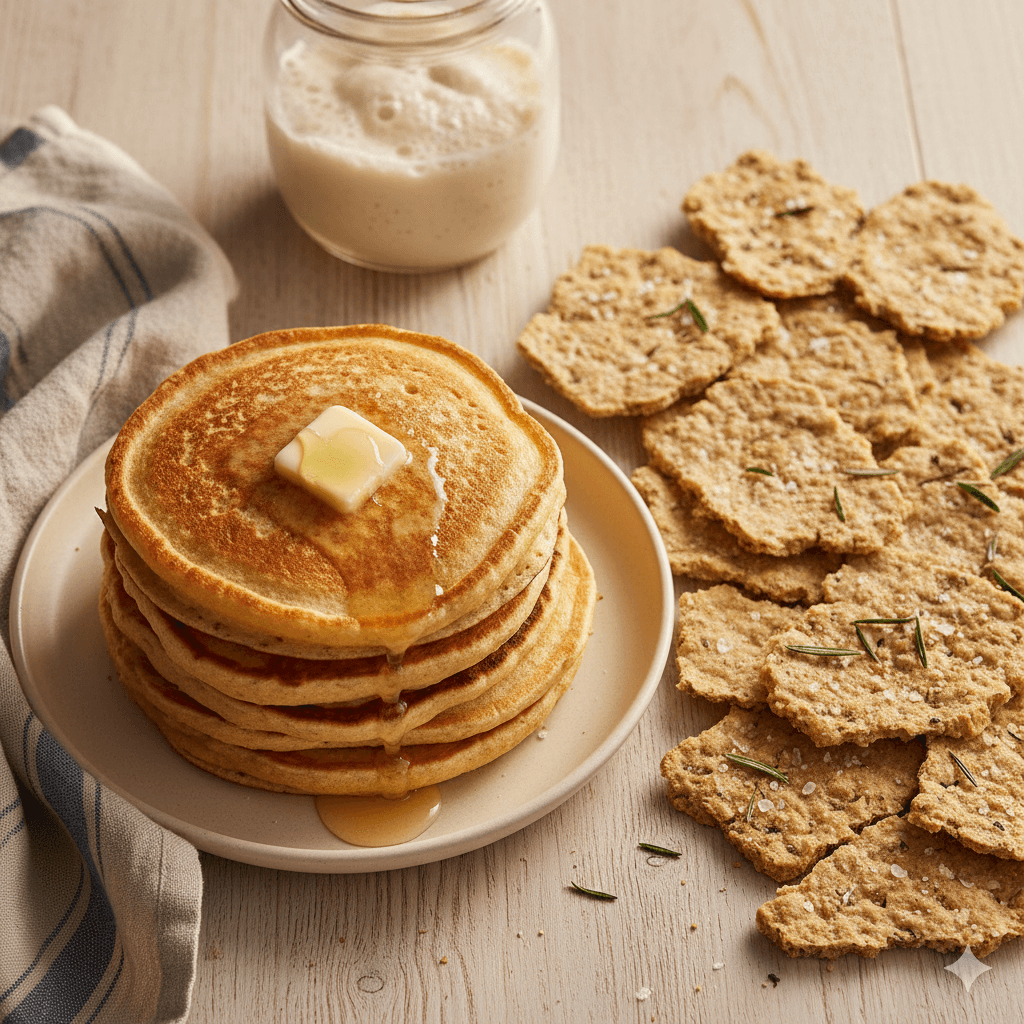
Throwing away starter feels wasteful. The good news is unfed discard is useful. It won't leaven bread, but the flavor is great in pancakes, crackers, pizza dough, and more. See our sourdough discard recipes guide for detailed recipes. Once your starter is ready, head to our sourdough bread guide to bake your first loaf.
- Pancakes and waffles — add discard to your batter for tang
- Crackers — spread thin on a baking sheet with olive oil and salt, bake at 350°F until crispy
- Pizza dough — substitute some of the flour/water in your recipe
- Banana bread — adds moisture and a subtle sourness
🫙 Name your starter
Seriously. People do this. It makes the daily feeding feel less like a chore and more like tending to something alive — because it is. Popular names include Clint Yeastwood, Bread Pitt, and Dough Exotic.