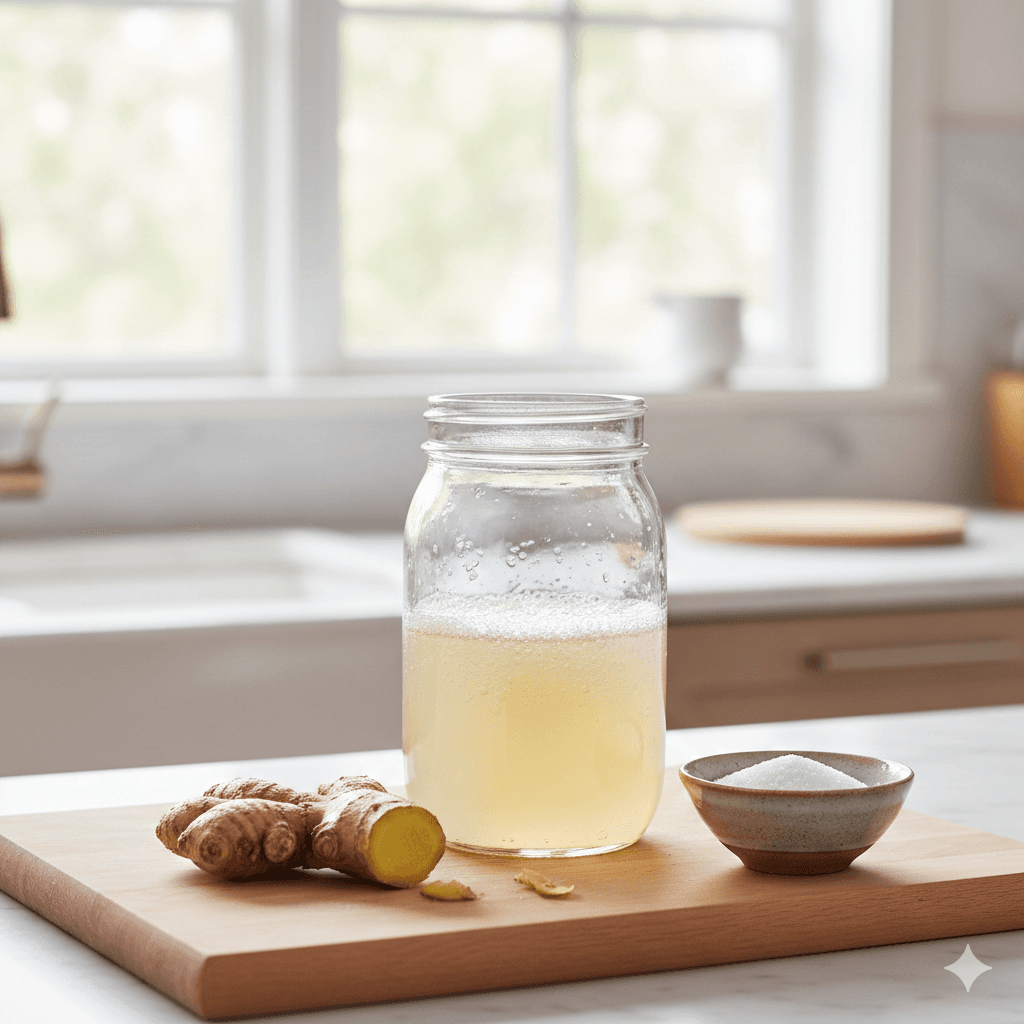
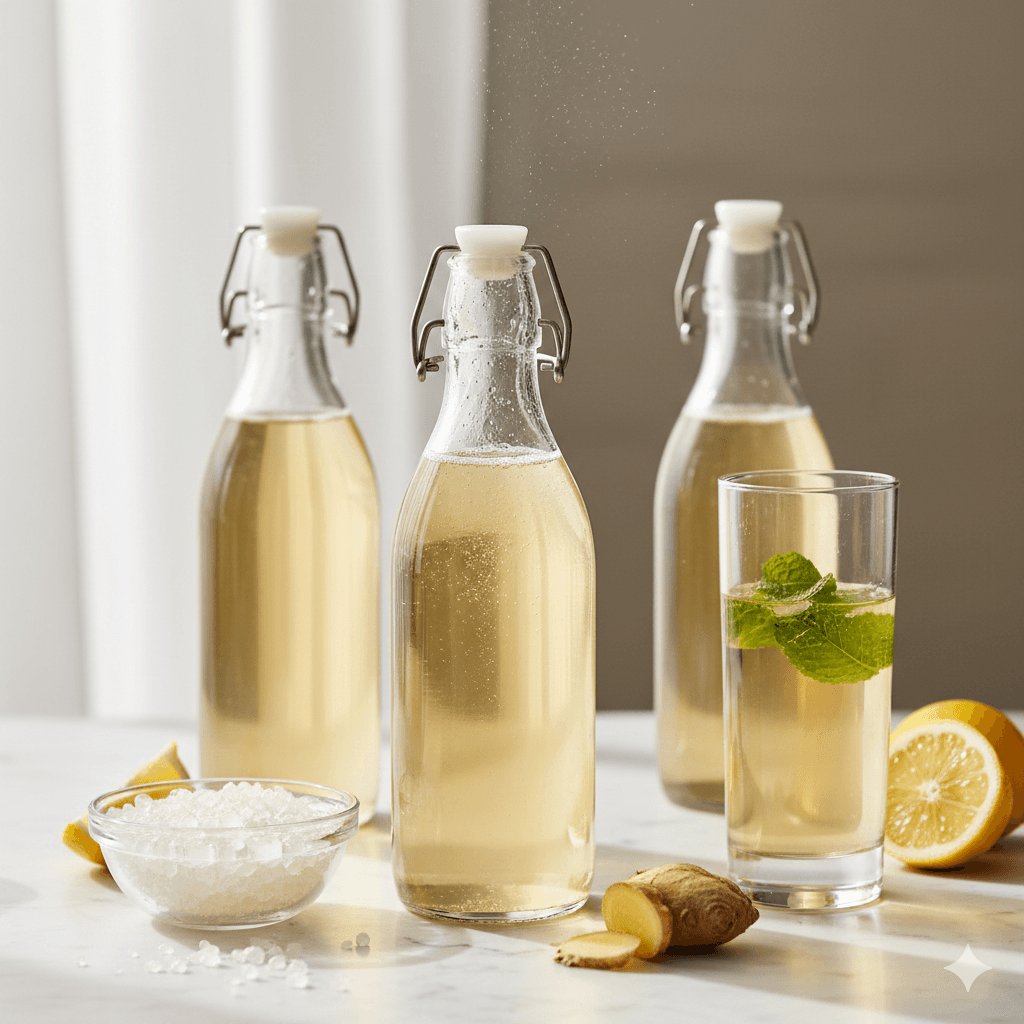
The moment lemons are cheap and your kitchen starts warming up, it 's time to make fermented lemonade. This is one of those spring ferments that feels almost too simple — squeeze some lemons, add a starter, wait two days — and then produces something genuinely impressive. Fizzy, tangy, bright, and alive with beneficial cultures. Nothing about it tastes like a science project. It tastes like the best lemonade you've ever had, with a little extra personality.
If you've been looking for a gateway ferment for the warmer months, this is it. It requires no special equipment, no SCOBY to acquire, no long lead time. If you have a ginger bug already bubbling on your counter — or some whey left over from straining yogurt — you can start today and be drinking something spectacular by the weekend.
What Is Fermented Lemonade?
Regular lemonade is just lemon juice, sugar, and water. Delicious, but entirely inert. Fermented lemonade takes that same base and introduces a live starter culture — either a ginger bug or whey from yogurt — which kicks off a brief lacto-fermentation. The wild yeast and bacteria in the starter consume some of the sugar, producing carbon dioxide (carbonation) and a small amount of lactic acid (tang). The result is a drink that is naturally fizzy, noticeably lower in sugar than the original recipe, and full of live cultures.
It's not wildly alcoholic — think along the lines of a very mild kombucha or water kefir. The fermentation time is short (2–3 days), which keeps the alcohol content negligible and the flavor bright rather than funky. What you get is essentially a probiotic craft soda with a much shorter ingredient list than anything from the store.
The Ingredients
This recipe makes roughly one quart (about four generous glasses). Scale up freely — the ratios stay the same.
- 1 cup fresh lemon juice — about 6–8 lemons depending on size. Freshly squeezed is non-negotiable here. Bottled lemon juice often contains preservatives that will inhibit or kill your starter culture.
- 4 cups filtered water — filtered or spring water only. Tap water contains chlorine that can interfere with fermentation.
- 1/2 cup sugar — plain white granulated sugar works best. Honey can work but ferments less predictably and adds its own flavor. Avoid anything with added minerals or molasses (like raw sugar) for your first batch.
- 1/4 cup active ginger bug liquid — strained from an active, bubbly ginger bug. This is the most common starter for fermented lemonade and produces the brightest, most complex carbonation. Alternatively, use 1/4 cup fresh whey (the liquid drained from plain yogurt through a cheesecloth) for a milder, more neutral result.
How to Make It
The process is genuinely simple. Here's the full method from start to finish.
- Dissolve the sugar. Combine the sugar and about one cup of the filtered water in a saucepan over medium heat. Stir until the sugar is fully dissolved, then remove from heat and let it cool completely to room temperature. Adding the starter to warm liquid will kill it, so don't rush this step.
- Mix the lemonade base. In a clean quart-sized jar or pitcher, combine the cooled simple syrup, the fresh lemon juice, and the remaining three cups of filtered water. Stir well.
- Add your starter. Pour in the 1/4 cup of strained ginger bug liquid (or whey) and stir gently to combine. You should see small bubbles from the starter if it's active — that's exactly what you want.
- Bottle it. Pour the mixture into flip-top glass bottles (Grolsch-style) or any glass bottles with tight-fitting lids. Clean, recycled PET plastic soda bottles also work well and make a useful carbonation gauge — once they feel firm, fermentation is good and it's time to refrigerate. Leave about an inch of headspace at the top.
- Ferment at room temperature. Leave the sealed bottles on your counter, out of direct sunlight, for 2–3 days. The ideal temperature is 68–75°F. Warmer kitchens ferment faster; cooler kitchens may need an extra day.
- Burp the bottles daily. This is important. Once or twice a day, briefly open each bottle just enough to release some pressure, then reseal. This prevents bottles from building up dangerously high carbonation. A small hiss when you open it is good — that's CO2 doing its job.
- Taste-test on day two. Open a bottle, pour a small amount, and taste. It should be noticeably fizzy, pleasantly tart, and slightly less sweet than a regular lemonade. If you want more carbonation or more tang, seal it back up and give it another 12–24 hours.
- Refrigerate when ready. Once you're happy with the fizz and flavor, move all the bottles to the fridge. Cold temperatures slow the fermentation dramatically, locking in the carbonation. Fermented lemonade keeps well in the fridge for 1–2 weeks, though it's rarely around that long.
Ginger Bug vs. Whey: Which Starter Is Better?
Both work well, but they produce noticeably different results. A ginger bug starter brings more carbonation, a slight ginger warmth, and a complex wild-yeast character that feels more craft-soda than anything else. It's the better choice if you want something bold and fizzy.
Whey produces a gentler ferment. The carbonation is lighter, the flavor is more cleanly tart, and the probiotic profile leans more toward lactobacillus (the same bacteria in yogurt). It's a slightly more approachable result for people who find fermented drinks too funky, and it's a fantastic use for the whey that accumulates when you strain yogurt or make labneh.
Flavor Variations
Once you've nailed the base recipe, the variations are easy and worth exploring. Add any of the following to the bottle before sealing for the fermentation period:
- Mint: A handful of fresh mint leaves in the bottle adds a classic lemonade-stand flavor with a little herbal brightness. Remove the leaves before refrigerating if you plan to store it for more than a few days.
- Lavender: One teaspoon of dried culinary lavender per bottle. This is unexpectedly good — floral and slightly earthy against the sharp lemon. It's a combination that feels very much like late spring.
- Raspberry: A small handful of fresh or frozen raspberries per bottle. They add natural sugars that accelerate carbonation slightly (check your bottles more carefully if you add fruit) and turn the whole batch a gorgeous pink. Strain before serving.
The Health Angle
Fermented lemonade is genuinely better for you than the regular version, and not just marginally. By the time fermentation is complete, the culture has consumed a meaningful portion of the added sugar — so you're getting noticeably less sugar per glass than you put in. Exactly how much depends on fermentation time and temperature, but a 2–3 day ferment typically reduces sugar content by 20–30%.
You're also getting live probiotic cultures in every glass. The specific strains depend on your starter — ginger bug brings wild yeast and various lactobacillus species; whey brings the specific lactobacillus strains from your yogurt culture. Either way, it's a genuinely functional drink in a way that regular lemonade simply isn't. For more spring fermentation ideas that share this same easy, low-commitment energy, see our spring fermentation projects roundup.
A Note on Bottle Safety
Fermentation produces real carbonation pressure. Burping your bottles daily is not optional — it's how you avoid a bottle rocket situation in your fridge. Flip-top glass bottles (Grolsch-style) are ideal because you can feel the pressure when you crack them open. If you use screw-top glass, tighten them firmly but check them more frequently. Never use sealed glass jars that aren't designed for pressure (like mason jars with regular lids) — they can crack or shatter. When in doubt, plastic bottles can serve as a pressure gauge: once they feel firm, carbonation is good and it's time to refrigerate.
First batch tips
Use an active ginger bug that's been fed within the last 24 hours — a sluggish starter means weak carbonation. Taste on day two before committing to refrigerating; the window between "nicely fizzy" and "aggressively tart" is about 12 hours once it gets going. And if your first batch is flatter than expected, let it go a full third day before giving up — warm spring kitchens can still have cool spots that slow things down. Don't have a ginger bug yet? Here's how to start one from scratch — it takes five days and costs almost nothing.