What Is a Ginger Bug?
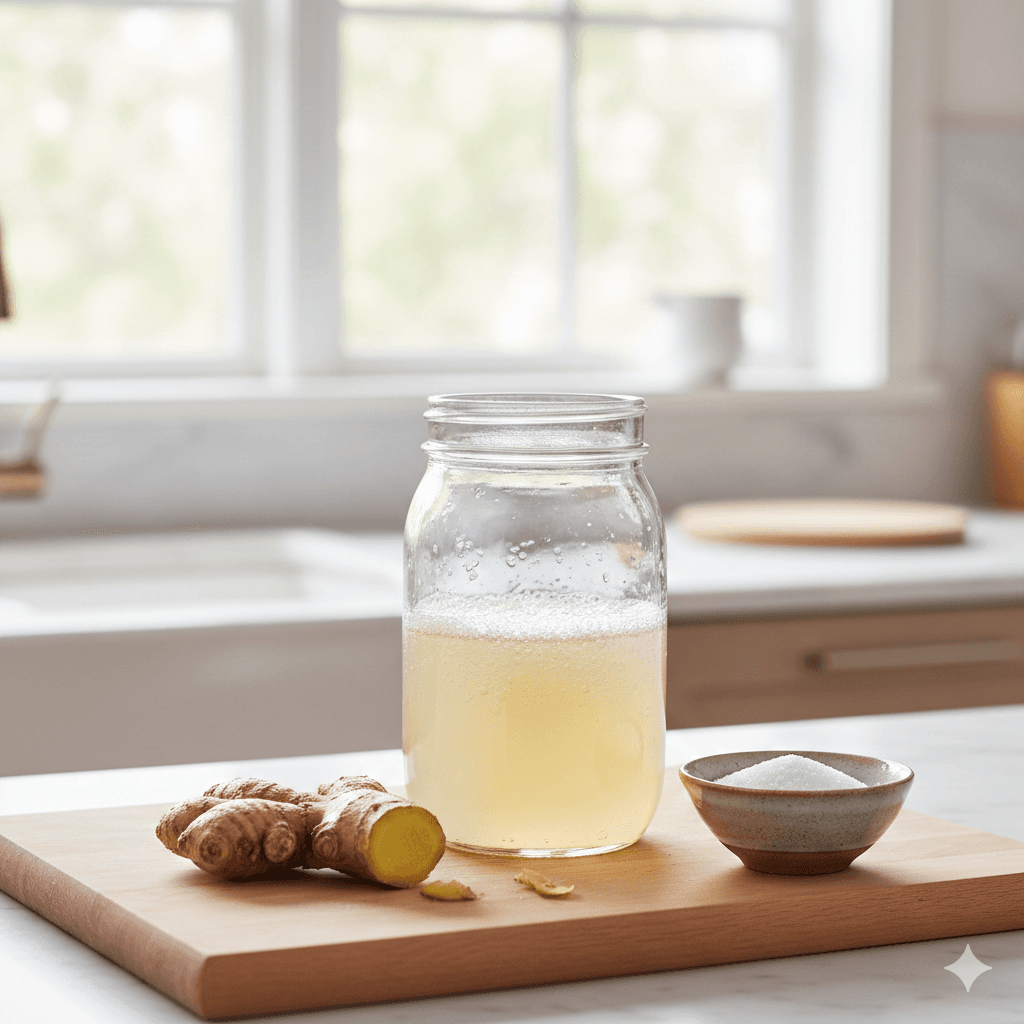
A ginger bug is a naturally fermented slurry of fresh ginger, sugar, and water. It's essentially a wild yeast starter — similar in concept to a sourdough starter, but instead of leavening bread, it carbonates drinks. The fresh ginger introduces wild yeast and beneficial bacteria from its skin, and the sugar feeds them. Over 5–7 days of daily feeding, the mixture becomes a bubbly, active culture that you can use to ferment homemade sodas.
Once your ginger bug is active, you can use it to make ginger beer, root beer, lemon-lime soda, fruit sodas — basically any naturally carbonated drink you can imagine. It's one of the simplest fermentation projects out there, and the results are genuinely impressive. No special equipment, no SCOBY, no kefir grains. Just ginger from the grocery store.
💡 Why organic ginger?
The wild yeast you're trying to capture lives on the skin of the ginger. Conventional ginger is often irradiated to extend shelf life, which kills the very microbes you need. Organic ginger from a farmers' market or health food store gives you the best chance of a vigorous, active bug. If you can't find organic, try a few different sources — some conventional ginger still works fine.
Starting Your Ginger Bug
The process is simple: add ginger and sugar to water, then feed it daily for 5–7 days until it gets bubbly and active. That's it.
Day 1 — Make the base. Grate or finely chop about 2 tablespoons of fresh ginger (leave the skin on — that's where the wild yeast lives). Add it to your mason jar along with 2 tablespoons of sugar and 2 cups of room-temperature filtered water. Stir well until the sugar dissolves. Cover loosely with a cloth, coffee filter, or a lid set on top without tightening it — you want air flow but not fruit flies.
Days 2–7 — Feed it daily. Every day, add 1 tablespoon of grated ginger and 1 tablespoon of sugar. Stir it well each time. That's your entire daily commitment — about 2 minutes of work. The stirring introduces oxygen, which helps the yeast multiply in the early stages.
Watch for signs of life. Within 2–3 days, you should start seeing small bubbles forming on the surface and around the ginger pieces, especially after stirring. The mixture might start to smell pleasantly yeasty and gingery — almost like ginger ale. By day 5–7, it should be visibly fizzy, with bubbles rising to the surface on their own. You might hear it faintly hissing when you remove the cover.
Test for readiness. Your ginger bug is ready when it's actively bubbly — you should see consistent fizzing, especially right after stirring. It should smell pleasantly yeasty and gingery (not rotten or like nail polish). If you taste a small spoonful, it should be slightly fizzy on the tongue with a mild sweetness and a yeasty tang. Once it's reliably bubbly after each feeding, it's ready to use.
🌡️ Temperature matters
Warmer kitchens (72–80°F / 22–27°C) will produce an active ginger bug faster — sometimes in as little as 3–4 days. Cooler kitchens may take a full week or longer. If your kitchen is below 68°F, try placing the jar on top of your fridge, near a warm appliance, or on a seedling heat mat. Don't put it in the oven or microwave for warmth — even residual heat can kill the culture.
How to Make Ginger Beer from Your Bug
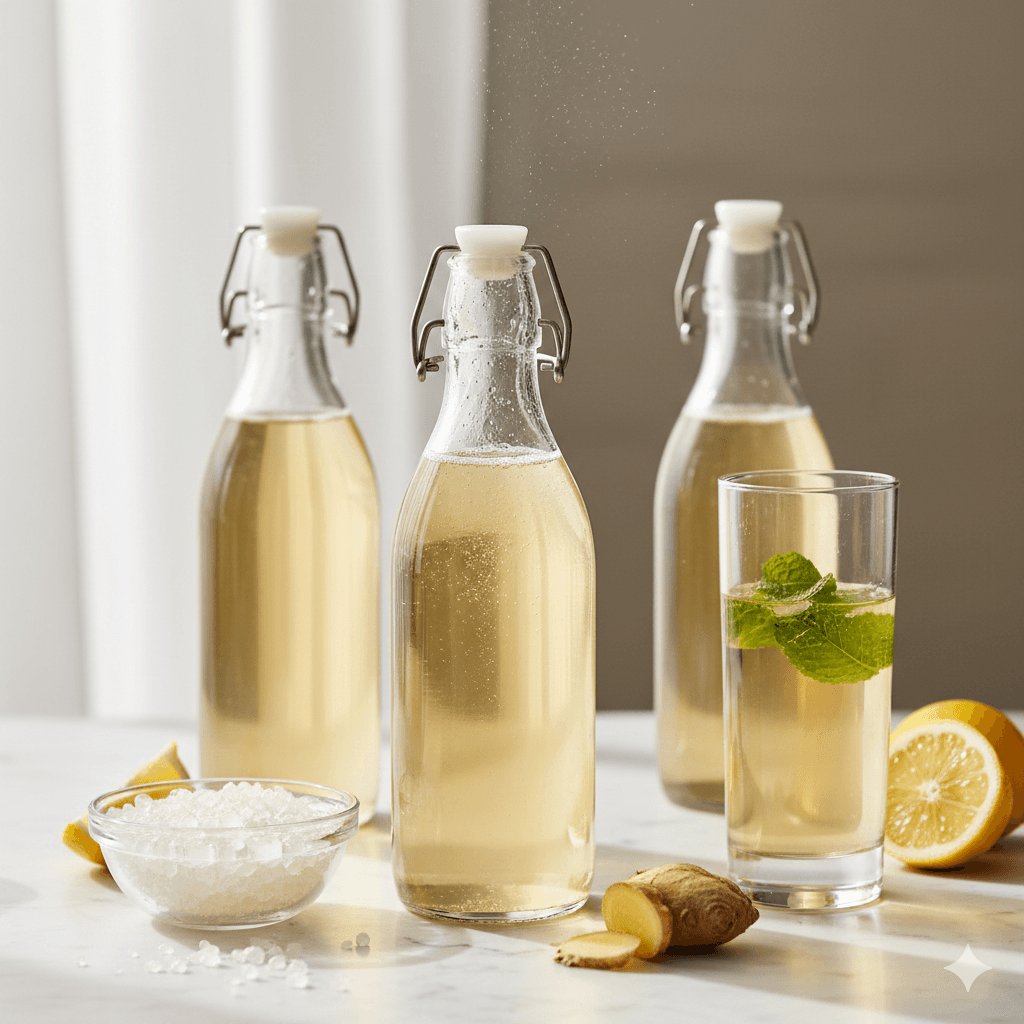
This is the classic use for a ginger bug, and it's ridiculously good. Homemade ginger beer has a depth and spice that store-bought versions can't touch. Here's a simple recipe that makes about 1 liter.
Make a ginger tea base. Grate or finely chop about 2 inches of fresh ginger (you can peel it this time — doesn't matter for flavor). Simmer it in 2 cups of water with 1/4 cup of sugar for 15–20 minutes. You're making a concentrated ginger tea. Add the juice of one lemon for brightness. Let this cool completely to room temperature. Do not add the bug while it's warm — heat kills the culture.
Combine with the bug. Strain the ginger tea into a clean jar or pitcher. Add 2 more cups of room-temperature filtered water to dilute it (4 cups total liquid). Then strain in 1/4 cup of liquid from your active ginger bug (use only the liquid, not the ginger pieces). Stir well.
Bottle it. Pour the mixture into flip-top bottles, leaving about 1–2 inches of headspace. Seal the bottles tightly — this is where carbonation happens. The yeast from the ginger bug will eat the sugar and produce CO2, which gets trapped in the sealed bottle.
Ferment 2–3 days. Leave the sealed bottles at room temperature for 2–3 days. Burp them at least once a day by briefly opening the cap over the sink to release excess pressure. After 2–3 days (less in warmer kitchens), move the bottles to the fridge. Cold slows fermentation and stabilizes carbonation. Chill for a few hours before serving.
⚠️ Pressure warning
Ginger beer can build serious carbonation pressure — ginger is particularly vigorous. Always use bottles rated for carbonation (flip-top glass bottles or recycled plastic soda bottles). Never use regular mason jars or thin decorative bottles — they can shatter. Burp daily, and open your first bottle over the sink until you know how much fizz your setup produces.
Other Drinks You Can Make
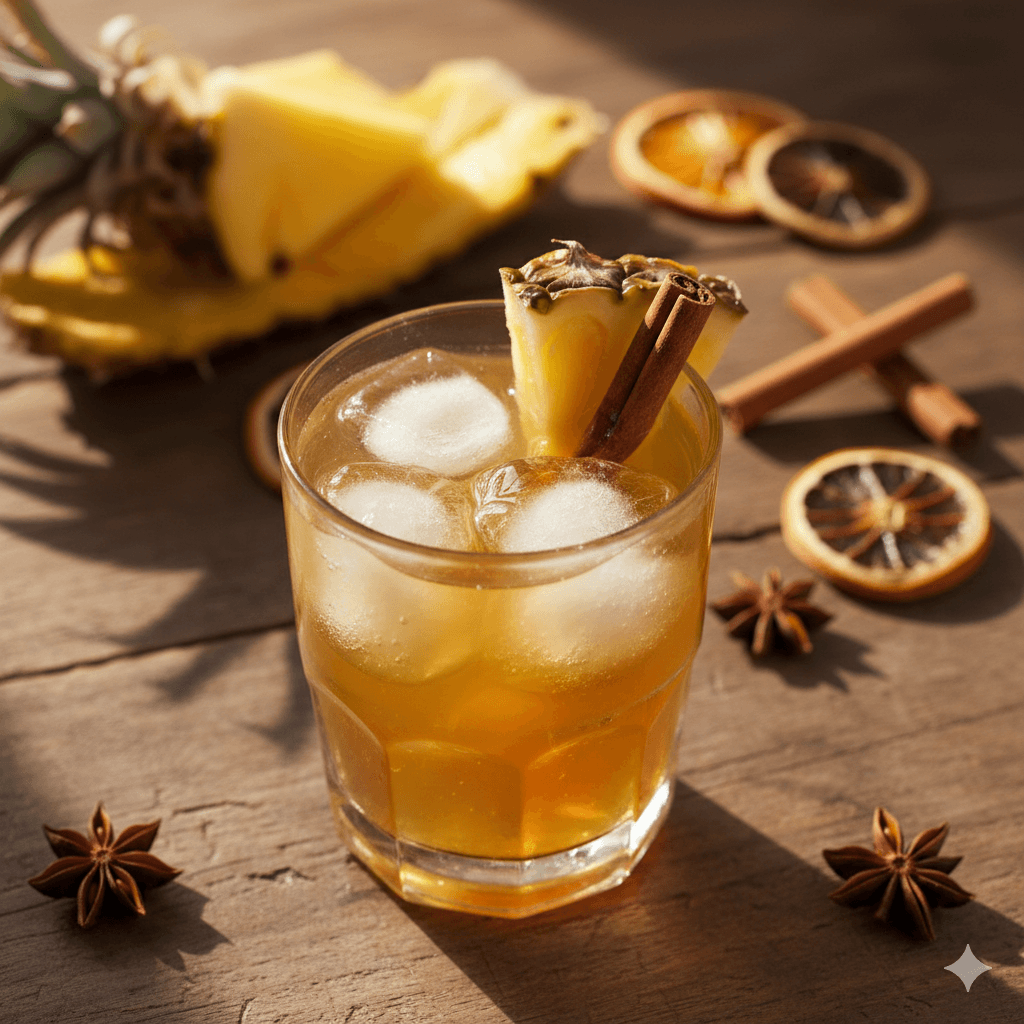
Your ginger bug isn't just for ginger beer. You can use it to naturally carbonate almost any sweetened liquid. For other fermented drink projects, also check out tepache (fermented pineapple, ready in 3 days) and water kefir (a probiotic soda using kefir grains). For tea-based fermentation, see our kombucha brewing guide. The basic formula is the same for all: make a sweetened tea or juice base, let it cool, add 1/4 cup of strained ginger bug liquid per liter, bottle in sealed bottles, and wait 2–3 days.
- Root beer — Simmer sassafras bark, sarsaparilla, vanilla bean, and a touch of star anise in sugar water. Cool, add ginger bug, bottle, and ferment. Tastes like craft root beer.
- Lemon-lime soda — Sugar water + juice of 2 lemons and 2 limes per liter + ginger bug. Refreshing and clean.
- Fruit sodas — Blend or juice fresh fruit (berries, peaches, mango), mix with sugar water, add ginger bug. Naturally carbonated fruit soda with no artificial anything.
- Turmeric tonic — Simmer turmeric, ginger, black pepper, and honey in water. Cool completely, add ginger bug. Anti-inflammatory and fizzy.
- Herbal sodas — Brew a strong tea from mint, chamomile, hibiscus, or lavender. Sweeten, cool, add ginger bug. Floral and bubbly.
💡 How much ginger flavor?
The ginger bug adds a very subtle ginger note to your finished drinks — it's mostly there to provide the yeast for carbonation. If you want more ginger flavor (like for ginger beer), add fresh ginger to your recipe base. If you're making something like a berry soda where you don't want ginger flavor at all, the small amount of bug liquid won't be noticeable.
Troubleshooting
No bubbles after 5 days
The most common cause is non-organic ginger that's been irradiated. Try switching to organic ginger — ideally from a farmers' market or health food store. Also check your water: heavily chlorinated tap water can suppress the wild yeast. Use filtered water or let tap water sit out for 24 hours before using. If your kitchen is cold (below 68°F), move the jar to a warmer spot. You can also try adding a pinch of active dry yeast as a boost to get things going — it won't taste the same as a purely wild-caught bug, but it works.
It smells bad — like rotten eggs or nail polish
A healthy ginger bug should smell pleasantly yeasty, gingery, and slightly sweet. If it smells strongly of sulfur, nail polish remover (acetone), or just generally foul, something went wrong. This can happen if harmful bacteria outcompeted the good ones — usually because the jar or utensils weren't clean, or the water had high chlorine. Start over with a clean jar, fresh organic ginger, and filtered water.
Mold on the surface
Fuzzy mold (white, green, or black) means the bug is contaminated and you should start over. Mold is relatively rare with ginger bugs because the acidic, sugary environment is hostile to mold. But it can happen if the sugar runs low (you missed a feeding), the environment is too cool and damp, or something contaminated got into the jar. If you see mold, discard everything and start fresh.
It's fizzy but too sweet
Your ginger beer or soda is probably under-fermented. Leave the sealed bottles at room temperature for another day or two. The yeast needs more time to eat the sugar. Next time, try using a bit less sugar in your recipe base, or add a little more ginger bug liquid (1/3 cup instead of 1/4 cup) for a faster ferment.
It's fizzy but too sour or yeasty
You fermented too long or used too much ginger bug liquid. Shorten the bottled fermentation time (try 1.5–2 days instead of 3) and move to the fridge sooner. Cold stops fermentation quickly. Also try using a bit less bug liquid — even 2–3 tablespoons per liter can be enough with an active culture.
No carbonation in the finished bottles
The most common cause is a bad seal on your bottles. Make sure you're using bottles designed for carbonation with tight-fitting caps. Also check that your ginger bug was truly active before using it — if it wasn't bubbly, the liquid won't have enough yeast to carbonate your drink. Finally, make sure there's enough sugar in the bottle for the yeast to eat. A flat drink with enough sugar usually just needs more time at room temperature.
Maintaining and Storing Your Ginger Bug Long-Term
A ginger bug is a living culture, and like any living thing, it needs regular feeding to stay healthy. But unlike some fermentation cultures, it's very low-maintenance and forgiving.
If you're brewing regularly
Keep the bug on your counter and feed it daily (1 tablespoon ginger + 1 tablespoon sugar). Every time you use some of the liquid for a batch of soda, just top it off with a little water and keep feeding. The ginger pieces will accumulate over time — every week or two, strain out the old ginger and keep just the liquid, then continue feeding with fresh ginger.
If you want to take a break
Put the bug in the fridge. Cold dramatically slows the yeast and bacteria, so it needs much less frequent feeding. Feed it once a week (1 tablespoon each of ginger and sugar) to keep it alive. It'll go mostly dormant and can survive in the fridge for weeks at a time between feedings. When you're ready to brew again, take it out of the fridge, move it to the counter, and feed it daily for 2–3 days to reactivate it before using.
Long-term storage
For extended breaks (a month or more), you have a couple of options. You can feed it well, strain it, and freeze the liquid in ice cube trays — thawed ginger bug liquid can sometimes restart a culture, though this isn't always reliable. The more dependable approach is to simply keep it in the fridge and feed it once a week. It's genuinely minimal effort. If your bug ever dies or gets contaminated, starting a new one from scratch only takes a week, so there's no need to stress about backups.
♻️ Don't waste the spent ginger
All that ginger you strain out is still packed with flavor. Chop it finely and use it in stir-fries, add it to smoothies, brew it into a strong tea, candy it with sugar, or toss it into compost. Some people blend it into salad dressings or marinades. The flavor is milder than fresh ginger (the yeast has eaten some of the sugars), but it's still plenty fragrant and spicy.