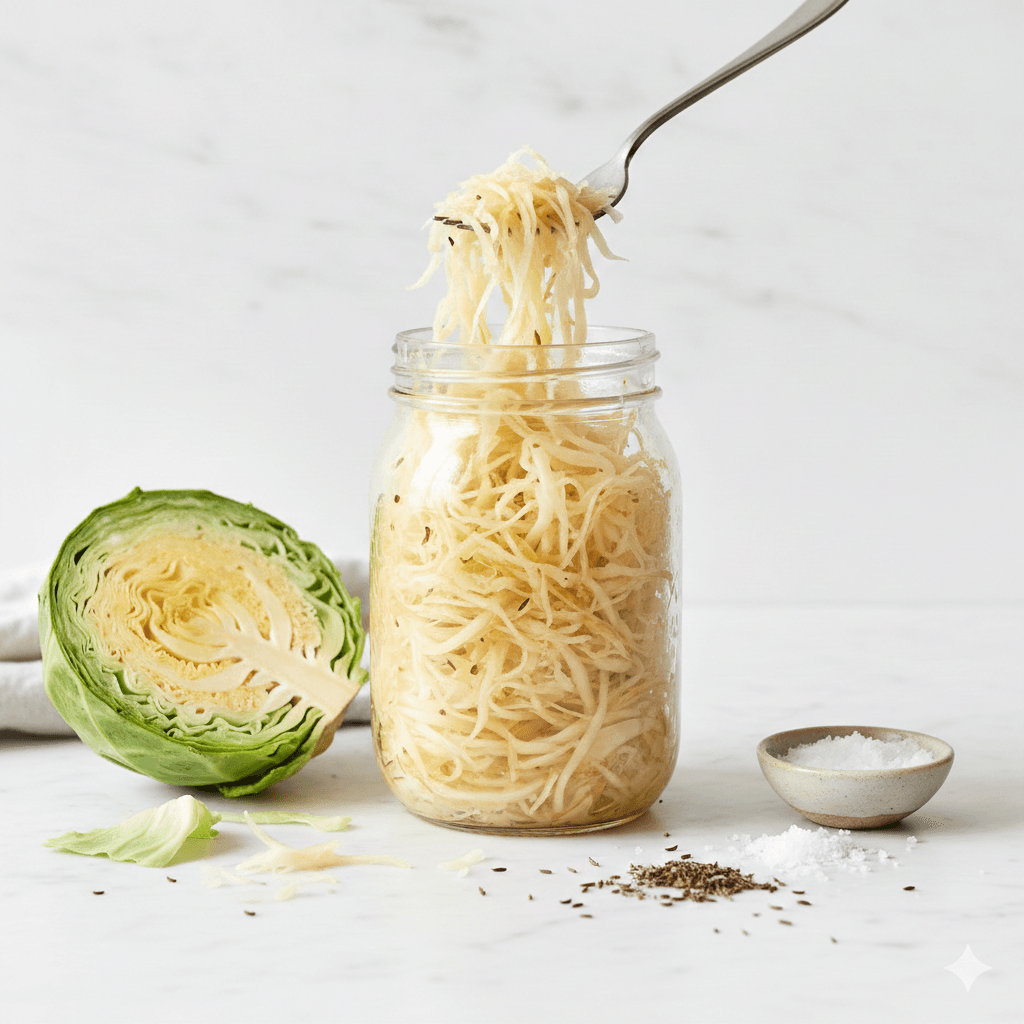
Homemade sauerkraut kept refrigerated in a sealed jar will last 4–6 months easily, and often 1–2 years if the cabbage stays submerged in its brine and the jar is sealed between uses. Sauerkraut is one of the most shelf-stable fermented foods you can make at home — the salt and acidity that develop during fermentation create an inhospitable environment for spoilage organisms.
That said, shelf life varies depending on whether the jar has been opened, how it's stored, and whether you made it at home or bought it from a store. Here's a breakdown of each scenario.
How Long Does Unopened Homemade Sauerkraut Last?
An unopened jar of homemade sauerkraut stored in the refrigerator will keep for 6 months to over a year. If your jar is properly sealed and the cabbage is fully submerged in brine, the acidic environment prevents most spoilage. Many fermenters report batches that are still excellent at 12–18 months.
The flavor will deepen and become more sour over time — this is normal and expected. Long-aged sauerkraut has a more complex, funky flavor than a fresh batch. Some people prefer it younger and bright; others prefer the depth of a longer ferment.
How Long Does Opened Sauerkraut Last in the Fridge?
Once you've opened your jar and started eating from it, aim to finish it within 1–3 months. The main enemy after opening is air exposure — every time you open the jar, you introduce oxygen. Keep the cabbage pushed down below the brine after each use, seal the jar tightly, and it will stay good for months.
If you notice the brine level dropping and cabbage starting to poke above the surface, top it up with a light saltwater solution (about 1 teaspoon of non-iodized salt per cup of water) to keep everything submerged.
How Long Does Sauerkraut Last on the Counter?
If you're in the middle of active fermentation, room temperature is exactly where your jar should be — that's how fermentation works. A batch actively fermenting on the counter is safe and intended. Most sauerkraut ferments take 1–4 weeks at room temperature before they're ready to move to cold storage.
Finished sauerkraut left on the counter at room temperature is a different story. It will continue to ferment slowly, becoming progressively more sour, and will degrade in quality faster than refrigerated sauerkraut. Counter storage for finished sauerkraut is fine for a few days, but anything beyond a week belongs in the fridge. See our homemade sauerkraut guide for guidance on knowing when fermentation is complete.
Can You Freeze Sauerkraut?
Yes — freezing sauerkraut is safe and extends its life indefinitely from a food safety standpoint. However, there's a catch: freezing affects texture and significantly reduces the live cultures. The lactobacillus bacteria that make sauerkraut a probiotic food do not survive freezing in meaningful numbers. After thawing, the cabbage will also be softer and less crunchy.
If you're cooking with sauerkraut — adding it to soups, braises, or pierogies — frozen and thawed sauerkraut works fine. If you want it for its probiotic value or prefer the crisp texture of fresh sauerkraut, freezing is not the best option. The fridge is almost always the better long-term storage choice.
Commercial vs. Homemade: What's the Difference?
This is where a lot of confusion comes from. There are two very different kinds of sauerkraut sold commercially:
Refrigerated, live-culture sauerkraut (found in the refrigerated section, usually in glass jars) is similar to homemade. It contains live bacteria, will continue to ferment slowly, and has a shelf life of roughly 3–6 months from purchase when kept cold. Once opened, aim to finish it within 1–2 months.
Shelf-stable canned or jarred sauerkraut (found on grocery store shelves, unrefrigerated) has been heat-processed to kill bacteria. It has a much longer shelf life — often 1–2 years unopened at room temperature — but it contains no live cultures. Once opened, refrigerate it and use within 1–2 months.
If probiotic benefits are why you ferment, homemade or refrigerated live-culture sauerkraut is what you want. The shelf-stable versions are essentially pickled cabbage, not a living ferment.
How Do You Know If Sauerkraut Has Gone Bad?
Sauerkraut smells sour — sometimes sharply so. That's correct and expected. The smell alone is not a sign of spoilage. The signs that something has actually gone wrong are:
- A foul, putrid, or rotten odor — not just sour or tangy, but genuinely offensive in a way that signals decay rather than fermentation. Your nose knows the difference.
- Fuzzy mold growth — a thin white film on the surface (called kahm yeast) is harmless and can be skimmed off. Fuzzy growth in any color — white, green, black, pink — is mold and means the batch should be discarded. See our fermentation troubleshooting guide for more on telling kahm yeast from mold.
- Slimy, mushy texture throughout — some softening in long-fermented sauerkraut is normal, but if the cabbage has become uniformly slimy and unpleasant in texture, discard it.
- Unusual discoloration — pink, brown, or otherwise off-color sauerkraut that you can't explain (red cabbage aside, which naturally produces purple-tinted sauerkraut).
If your sauerkraut smells sour and looks normal — even if it's been in the fridge for eight months — it is almost certainly fine. Lacto-fermentation produces an environment that is genuinely hostile to harmful bacteria. The failure mode for sauerkraut is quality degradation (it gets too soft, too sour, or develops off-flavors) rather than dangerous spoilage, provided it was fermented correctly and kept cold.
The single most important storage habit.
After every use, push the cabbage back below the brine and seal the jar. Submerged cabbage in its own acidic brine is protected; cabbage poking out above the liquid is exposed to air and at risk. Do this consistently and your sauerkraut will last for months without any issues.