Asparagus has a narrow season — a few weeks in spring where the stalks are tight, crisp, and deeply flavored — and then it's gone until next year. Fermentation changes that. A jar of lacto-fermented asparagus captures that peak-season crunch and transforms it into something brighter, tangier, and more complex than fresh asparagus ever manages to be. It's also one of the most striking things you can bring to a table — tall spears suspended in a bubbling brine, impossible to ignore.
Fermented asparagus is not pickled asparagus. Vinegar pickles are fast and shelf-stable, but they cook the vegetable in acid. Lacto-fermentation uses salt and naturally occurring bacteria to slowly acidify the brine, leaving the asparagus alive — both literally (with active probiotic cultures) and texturally (still crisp in a way that vinegar pickles rarely achieve). It takes a few days instead of a few minutes, but the result is categorically better.
If you're new to vegetable fermentation, our beginner's guide to home fermentation covers the basics — salt ratios, equipment, and what to look for during active fermentation. It's worth reading before your first batch.
Why Asparagus Ferments So Well
Asparagus is an ideal fermentation candidate for a few reasons. The stalks are firm and fibrous, which means they hold their texture remarkably well over the fermentation period — you're not going to end up with mush the way you might with softer vegetables like tomatoes. The flavor is grassy and slightly bitter in a way that tanginess complements perfectly. And the shape is practical: tall spears pack neatly upright in a wide-mouth mason jar, requiring almost no prep beyond trimming.
The most important variable, as with all fermented vegetables, is salt concentration. Too little and the wrong bacteria take over; too much and fermentation stalls. For asparagus, a 2% brine by weight produces consistently excellent results — crisp, tangy, and ready in 3 to 5 days at room temperature.
What You Need
- 1 bunch fresh asparagus (about 1 lb), washed and trimmed to fit your jar
- 2 cups filtered water (non-chlorinated)
- 1 tsp non-iodized sea salt or kosher salt (about 9–10g)
- 2–3 garlic cloves, lightly smashed (optional but excellent)
- 1 tsp black peppercorns (optional)
- 1 small dried chili or pinch of red pepper flakes (optional)
- A wide-mouth quart mason jar
- A fermentation weight to keep spears submerged
On salt: iodized table salt can inhibit the beneficial bacteria that drive lacto-fermentation. Use sea salt, kosher salt, or pickling salt — anything non-iodized. For a complete breakdown of which salts work and why, see our guide to salt for fermentation.
On jars: a standard wide-mouth quart mason jar is perfect. The wide opening lets asparagus spears slide in upright without snapping. Here's our breakdown of the best jars for fermentation if you're setting up for the first time.
How to Ferment Asparagus — Step by Step
Step 1: Prep the asparagus
Wash the spears thoroughly and trim the woody bottoms so they stand about an inch below the rim of your jar. If the spears are thick, consider halving them lengthwise — they'll pack more tightly and ferment more evenly.
Step 2: Make the brine
Dissolve the salt in the filtered water and stir until fully dissolved. This is your 2% brine. It takes only a minute but it's the most important step — this brine will be the environment in which your ferment lives for the next several days.
Step 3: Pack the jar
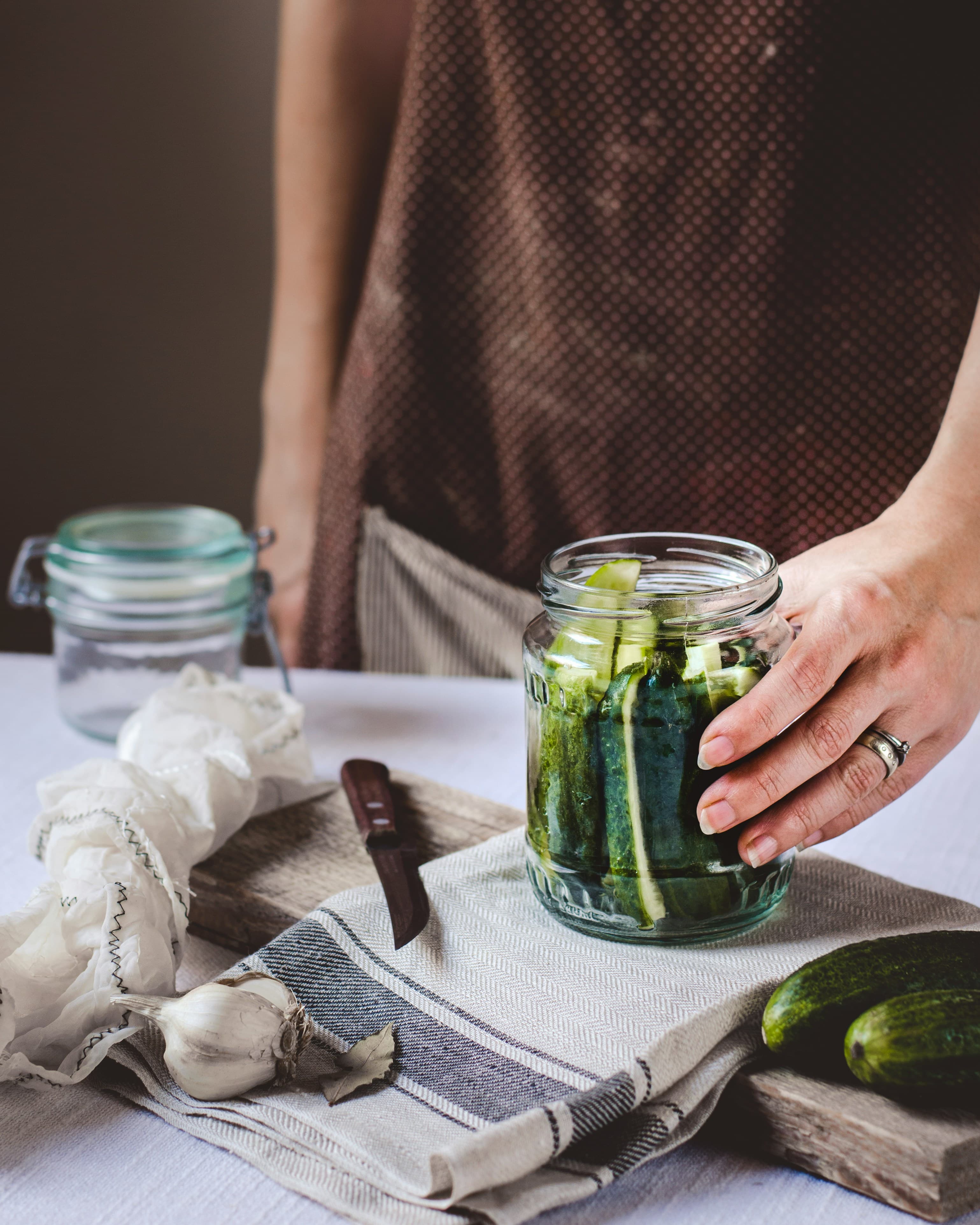
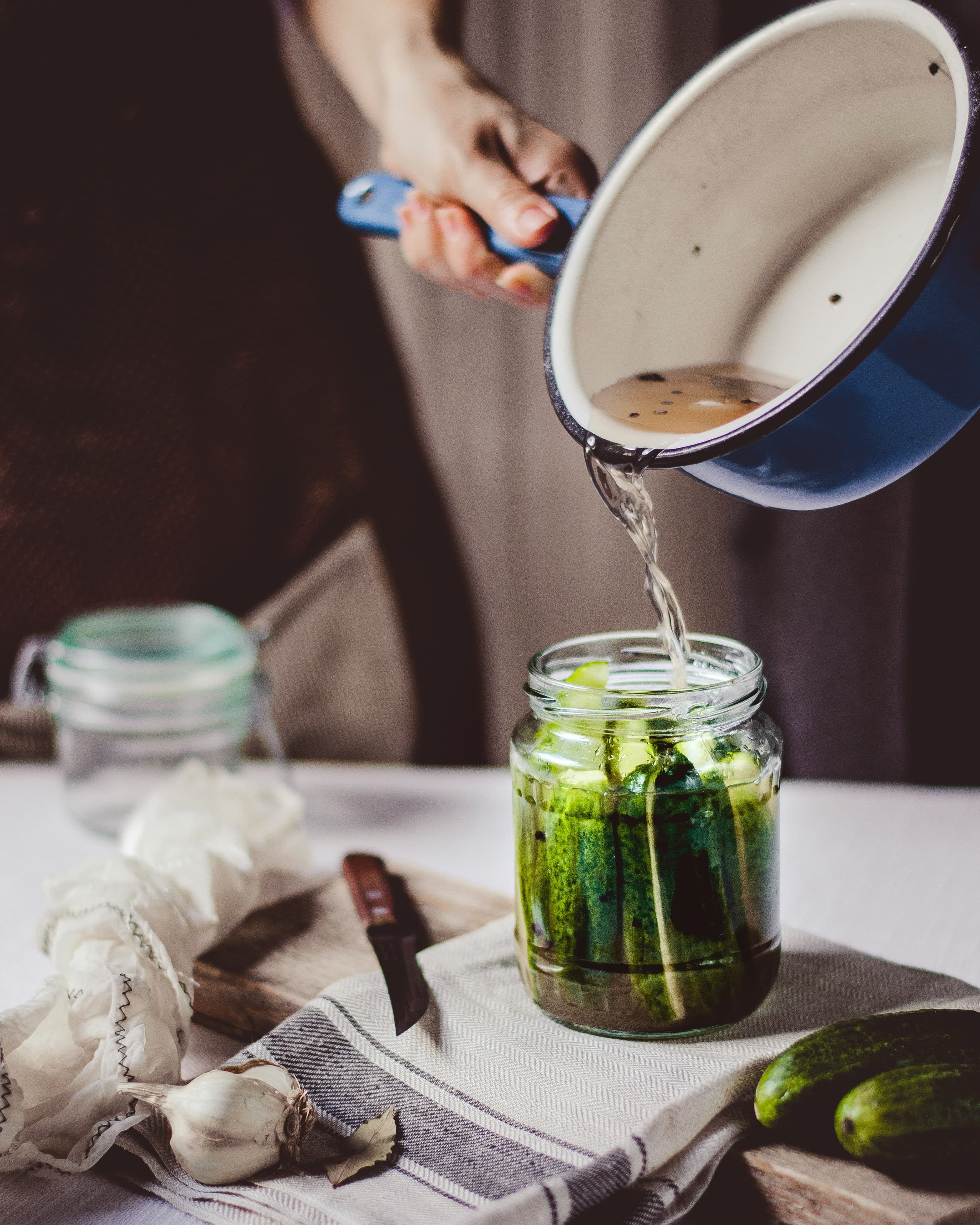
Place the garlic cloves and peppercorns at the bottom of the jar, then pack the asparagus spears in upright, tips facing up. Pack them snugly — they should hold themselves in place. Pour the brine over the spears until they are fully submerged, leaving about an inch of headspace at the top.
Step 4: Weight and cover
The biggest risk in vegetable fermentation is spears floating above the brine line and contacting air, which invites mold. Use a fermentation weight to keep everything submerged. Glass fermentation weights designed for wide-mouth mason jars make this easy. Cover the jar loosely with a cloth secured with a rubber band, or use an airlock lid.
Step 5: Ferment at room temperature
Leave the jar at room temperature — ideally 65–75°F — out of direct sunlight. Within 24–48 hours you should see small bubbles forming in the brine and rising to the surface. This is carbon dioxide from active fermentation. It's exactly what you want.
Taste starting on day 3. You're looking for a bright, clean tang with the spears still holding their texture. At day 5, the flavor will be more developed and distinctly sour. At any point where the flavor is right for you, seal the jar and move it to the fridge.
What to Watch For
A thin white film on the surface of the brine is almost certainly kahm yeast — harmless, but worth skimming off to preserve flavor. True mold (fuzzy, colored, penetrating into the spears) is rare with properly submerged vegetables in a 2% brine, but if you see it, discard the batch and start fresh. Cloudy brine is completely normal and actually indicates active bacterial activity — do not be alarmed.
How to Use Fermented Asparagus
Once fermented, asparagus is a remarkably versatile ingredient. The most obvious use is straight from the jar as a snack or alongside cured meats and aged cheeses on a board — the spears are visually striking and the flavor complex enough to hold its own next to bold cheeses. Beyond that:
- Bloody Marys and cocktails. A fermented asparagus spear is an outstanding bloody mary garnish — salty, tangy, and crisp. Far better than a celery stick.
- Grain bowls and salads. Chop fermented spears and scatter over farro, quinoa, or a simple green salad. The acid from the brine acts as a built-in dressing.
- With eggs. Fermented asparagus alongside soft-boiled or poached eggs is a classic combination. The brine cuts through the richness of the yolk.
- Use the brine. The brine itself is probiotic-rich and delicious — use it in place of vinegar in salad dressings, or drink a small shot before meals as a digestive aid.
Fermented asparagus keeps in the fridge for 2 to 3 months. It may continue to slowly acidify over time, becoming more sour — if you prefer a milder flavor, consume it within the first few weeks.
Variations Worth Trying
The base recipe is just the beginning. Once you've made a plain batch, try these variations:
- Lemon + dill. Add a few strips of lemon peel and a sprig of fresh dill to the jar. The result is bright, herby, and excellent with fish.
- Hot and garlicky. Double the garlic and add a sliced fresno or jalapeño. The heat ferments into the brine and becomes warm rather than sharp.
- Mixed spring vegetables. Pack asparagus alongside thin radish slices, carrot sticks, or green beans for a mixed spring pickle that uses whatever's fresh at the market. Our fermented pickles guide covers the brine ratios for mixed vegetable ferments.
Key tips for fermented asparagus
Use the freshest, tightest asparagus you can find — older spears with open tips ferment unevenly and lose texture quickly. Always use filtered water (tap water's chlorine can inhibit fermentation). Keep spears fully submerged below the brine at all times — this single habit prevents most problems. And taste early: asparagus ferments quickly, and the window between "bright and tangy" and "very sour" is only a day or two.