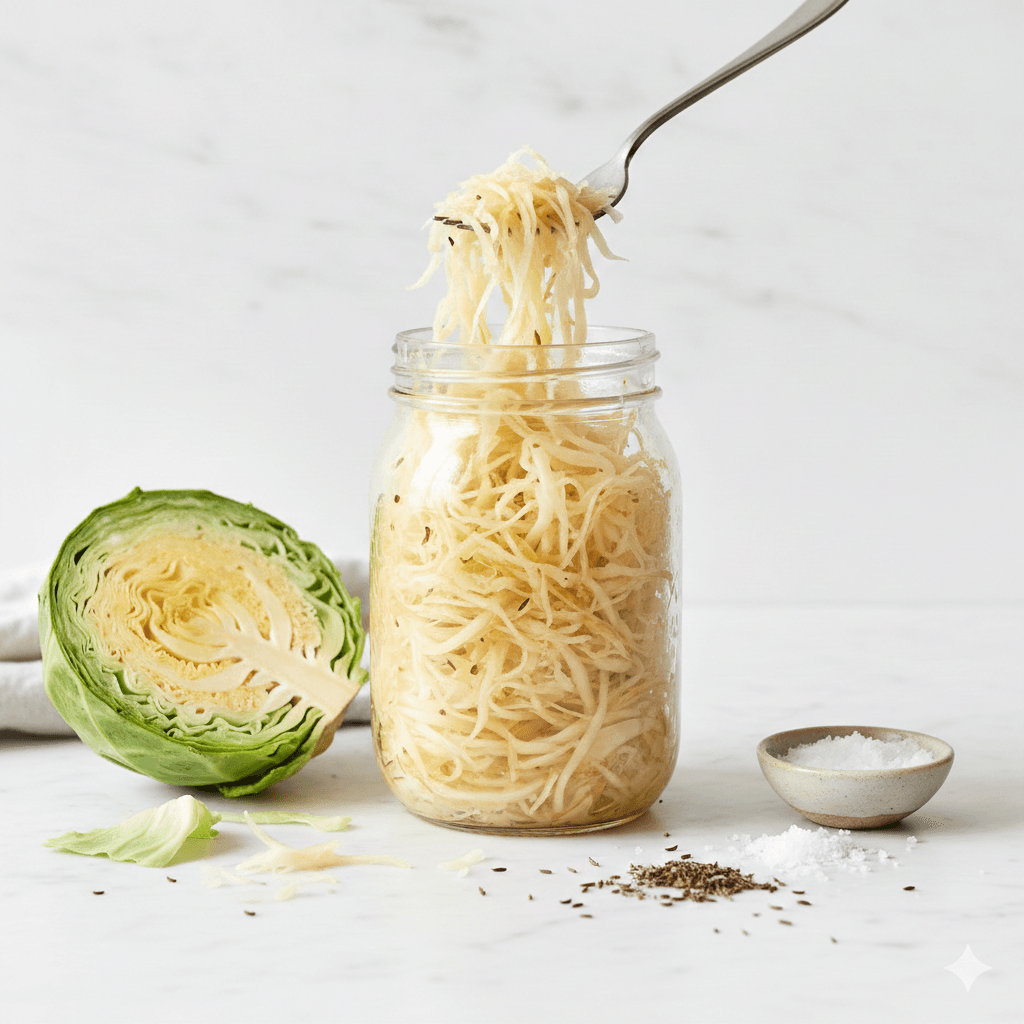
Sauerkraut is supposed to be crunchy. That satisfying bite — firm and crisp even after weeks of fermentation — is one of the hallmarks of a well-made batch. So when you lift the lid and find soft, limp cabbage that falls apart rather than snapping, something has gone wrong.
The good news: soft sauerkraut is almost never a safety issue. It won't make you sick. And it's almost always caused by one of a handful of specific, diagnosable problems — most of which are easy to avoid in your next batch. Here's what causes soft sauerkraut and exactly how to prevent it.
Cause 1: Too Much Salt
Salt is the most important variable in sauerkraut, and using too much is one of the most common reasons for soft texture. This seems counterintuitive — salt is supposed to help preserve crunch — but above a certain concentration, salt actually draws too much moisture out of the cabbage cells too quickly, breaking down the cell walls and creating a mushy texture.
What to aim for: 2% salt by weight is the sweet spot for most vegetable ferments, including sauerkraut. That's about 3 teaspoons (15–16g) of fine sea salt per 1.75 pounds of shredded cabbage. Weigh your salt and your cabbage rather than measuring by volume — precision matters here.
The fix: In future batches, weigh everything. Use the 2% ratio. A simple kitchen scale makes this trivially easy and removes the guesswork that causes most sauerkraut problems.
For a complete breakdown of which salts to use and exact ratios, see our guide to salt for fermentation.
Cause 2: Too Little Salt
On the other end, too little salt means insufficient osmotic pressure to pull brine out of the cabbage and create the protective acidic environment. The result is that the wrong bacteria — ones that produce enzymes that break down cell structure — get a foothold before the desirable lactobacillus bacteria can acidify the environment. This leads to soft, sometimes slimy sauerkraut with an off flavor.
Signs: Soft texture, slimy feel, possibly unpleasant smell beyond normal fermentation tang.
The fix: Again, 2% salt by weight. There's a reason this ratio is used consistently across traditional fermented vegetable recipes worldwide — it works.
Cause 3: Fermented Too Long or Too Warm
Temperature and time are closely linked in sauerkraut fermentation. Warmer temperatures accelerate fermentation, which is fine to a point — but over-fermentation softens the cabbage as the acids continue to break down the pectin in cell walls.
A batch left out at 75°F for three weeks will be considerably softer than a batch fermented at 65°F for two weeks. A batch left at room temperature during summer will ferment much faster than you expect and may turn soft before you realize it's ready.
The fix: Taste your sauerkraut regularly starting around day 7. Move it to the fridge as soon as the flavor is right — tangy, complex, with a pleasant sourness. Cold fermentation in the fridge slows the process dramatically and preserves crunch. You can also slow-ferment at cooler temperatures from the start; 60–65°F produces slower, more complex sauerkraut that stays crunchy longer.
Cause 4: Iodized Salt
Iodized table salt contains potassium iodide and other additives that inhibit the growth of beneficial lactobacillus bacteria — and can promote the growth of the bacteria that cause softening. This is one of the most common beginners' mistakes and one of the easiest to fix.
Signs: Sauerkraut that fermented slowly, looks off, has a slightly chemical smell, or turned soft even when the salt amount was correct.
The fix: Switch to non-iodized salt — fine sea salt, kosher salt, or pickling salt. Read labels carefully; "sea salt" sold in grocery stores is sometimes still iodized.
Cause 5: Cabbage Was Old or Stored Too Long
The texture of your finished sauerkraut is limited by the texture of your starting cabbage. Old, limp, or poorly stored cabbage that has lost moisture and structural integrity will not ferment into crispy sauerkraut no matter what you do — the cell walls are already compromised.
Signs: The outer leaves of the cabbage were wilted or yellowed; the cut cabbage didn't release much brine when massaged with salt.
The fix: Use fresh, firm, dense cabbage heads — ideally within a few days of purchase. Green cabbage works best. Savoy cabbage makes softer sauerkraut by nature (its ruffled leaves have more air space and less structure). If you want maximum crunch, use firm, heavy heads of standard green cabbage.
Bonus: Add Tannins for Extra Crispness
This is a trick borrowed from pickle-making: tannins inhibit the enzymes that break down pectin in vegetable cell walls, helping fermented vegetables maintain their crunch. Traditional fermenters have used this for centuries — adding grape leaves, oak leaves, horseradish leaves, or black tea to their crocks.
For sauerkraut, the most practical option is a few black tea leaves or a grape leaf tucked into the jar. The tannins are subtle enough not to affect flavor but noticeably preserve crunch over long fermentation periods.
Can You Rescue Soft Sauerkraut?
Unfortunately, once sauerkraut has gone soft, there's no way to restore the original crunch. The cell walls are broken down and won't recover. However, soft sauerkraut is not wasted — it's still safe to eat and still probiotic-rich. Use it in cooked applications where texture matters less: as a base for soups and stews, mixed into mashed potatoes, or as a topping for hot dogs and bratwurst where softness is actually preferred by many people.
For your next batch, follow the checklist above: fresh cabbage, 2% non-iodized salt by weight, correct temperature, and move to the fridge as soon as the flavor is right. Consistent sauerkraut is a process of understanding the variables — once you have them dialed in, every batch should be crisp.
For a complete walkthrough of sauerkraut from start to finish, including step-by-step instructions, see our homemade sauerkraut guide. For a broader look at what can go wrong with vegetable ferments and how to fix it, see our fermentation troubleshooting guide.
Quick crispy sauerkraut checklist
Fresh, firm cabbage. Non-iodized salt at exactly 2% by weight. Keep it at 65–72°F during fermentation. Taste starting day 7. Move to the fridge when the flavor is right — don't wait for a set number of days. Cold storage preserves crunch for months.