What Is Fermentation?
Fermentation is one of the oldest food preservation techniques in human history. At its core, it's a natural process where microorganisms — bacteria, yeast, or molds — break down sugars and starches in food, producing acids, alcohol, or gases as byproducts. That's what gives fermented foods their signature tangy flavors, fizzy textures, and long shelf life.
You already eat fermented foods all the time, whether you realize it or not. Yogurt, cheese, sourdough bread, pickles, soy sauce, beer, wine, chocolate, coffee — all fermented. The process isn't some fringe hobby. It's woven into every food culture on earth.
The good news? Most fermentation is incredibly simple. Many of the best fermented foods require nothing more than salt, water, a jar, and patience. You don't need a lab, special training, or expensive equipment. If you can chop vegetables and follow basic instructions, you can ferment.
Why Ferment at Home?
There are a lot of reasons people start fermenting, and most people stick with it for more than one:
- Better flavor — fermented foods develop complex, layered flavors that you simply can't get any other way. A fermented hot sauce tastes nothing like a cooked one.
- Gut health — live fermented foods are full of beneficial bacteria (probiotics) that support your digestive system and immune function.
- Save money — a head of cabbage and some salt costs a fraction of a jar of store-bought sauerkraut, and tastes significantly better.
- Reduce waste — fermenting is a great way to preserve produce before it goes bad. Overripe tomatoes become salsa. Pineapple scraps become tepache.
- Self-sufficiency — there's something deeply satisfying about making your own food from scratch with minimal ingredients.
- It's fun — watching a jar of vegetables bubble and transform over days or weeks is genuinely fascinating. It's alive, and that's the point.
The Three Types of Fermentation
Not all fermentation is the same. There are three main types you'll encounter as a home fermenter, and understanding the differences helps you know what to expect from each project.
1. Lacto-Fermentation
This is the most common type for home fermenters. Lactobacillus bacteria (naturally present on vegetables and in the air) convert sugars into lactic acid. That acid is what gives sauerkraut, kimchi, pickles, and fermented hot sauce their tangy bite. The acidic environment also preserves the food and keeps harmful bacteria from growing.
Lacto-fermentation usually only requires salt and vegetables — no starter culture needed. The bacteria are already there. Your job is to create the right conditions for them to thrive.
2. Alcohol Fermentation
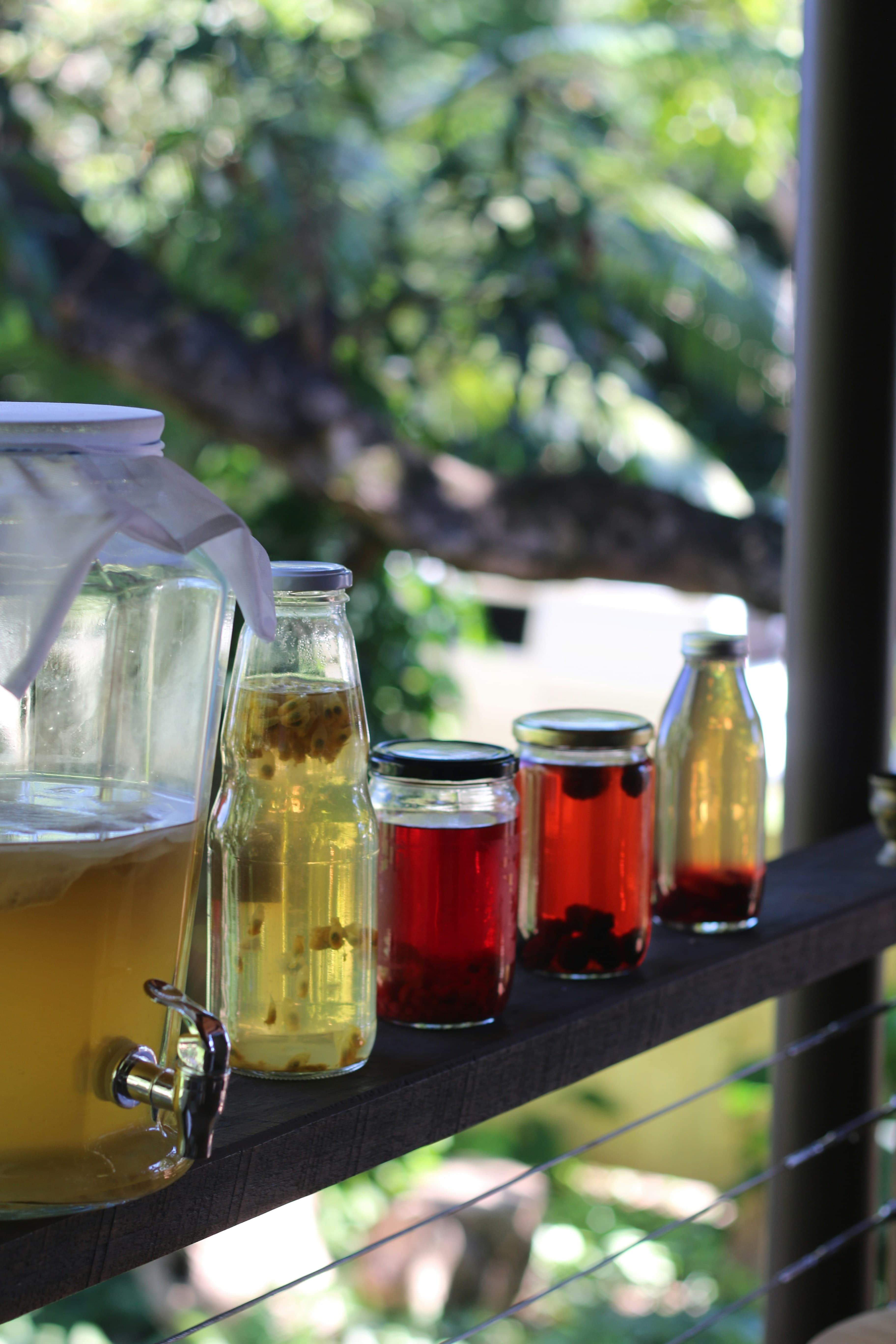
Yeast converts sugar into alcohol and carbon dioxide. This is how beer, wine, mead, and cider are made. Kombucha and tepache also involve alcohol fermentation, though the alcohol content stays low (usually under 2%).
Alcohol fermentation often requires a starter culture — a SCOBY for kombucha, kefir grains for water kefir, or packaged yeast for beer and wine.
3. Acetic Acid Fermentation
This is how vinegar is made. Acetobacter bacteria convert alcohol into acetic acid. It's a secondary fermentation — you need alcohol first (from wine, cider, etc.), and then the bacteria convert it further. Most beginners won't start here, but it's good to know about because it explains why your kombucha turns vinegary if you leave it too long.
What You Need to Get Started
You probably already own most of what you need. A couple of mason jars, non-iodized salt, a kitchen scale, and something to keep vegetables submerged below the brine. Check out the card above for our specific picks.
💡 Don't buy everything at once
Start with what you have. A mason jar, salt, and a zip-lock bag as a weight is enough for your first sauerkraut. Upgrade your equipment once you know you enjoy the process. Many experienced fermenters still use basic mason jars for everything.
The Golden Rules of Fermentation
No matter what you're fermenting, these principles apply to almost every project:
Keep it clean, not sterile. Wash your jars, cutting boards, and hands with hot soapy water. You don't need to sterilize anything for vegetable fermentation — you're working with wild bacteria, not fighting them. Just start with clean equipment.
Salt is your friend. Salt controls which bacteria grow. It suppresses harmful ones and encourages the lactobacillus you want. For most vegetable ferments, use 2–3% salt by weight of the total mixture (vegetables + brine). Too little salt and things can go wrong. Too much and fermentation slows to a crawl.
Keep it submerged. For vegetable ferments, everything must stay below the brine. Anything exposed to air can develop mold. Use a weight or press the vegetables down daily. This is the single most important thing to get right.
Temperature matters. Most ferments do best at 65–75°F (18–24°C). Warmer temperatures speed things up but can produce stronger, harsher flavors. Cooler temperatures slow things down and produce more nuanced results. Find a spot in your kitchen that stays relatively consistent.
Trust your senses. Your eyes, nose, and taste buds are your best tools. Fermented food should smell tangy and pleasant — like pickles, not like something rotten. If it smells foul, looks fuzzy with mold, or has off-putting colors, trust your instincts. When done right, fermentation is one of the safest forms of food preservation.
Your First Ferment: Where to Start
If you're brand new, here's the order I'd recommend. Each project builds a little confidence and teaches you something new:
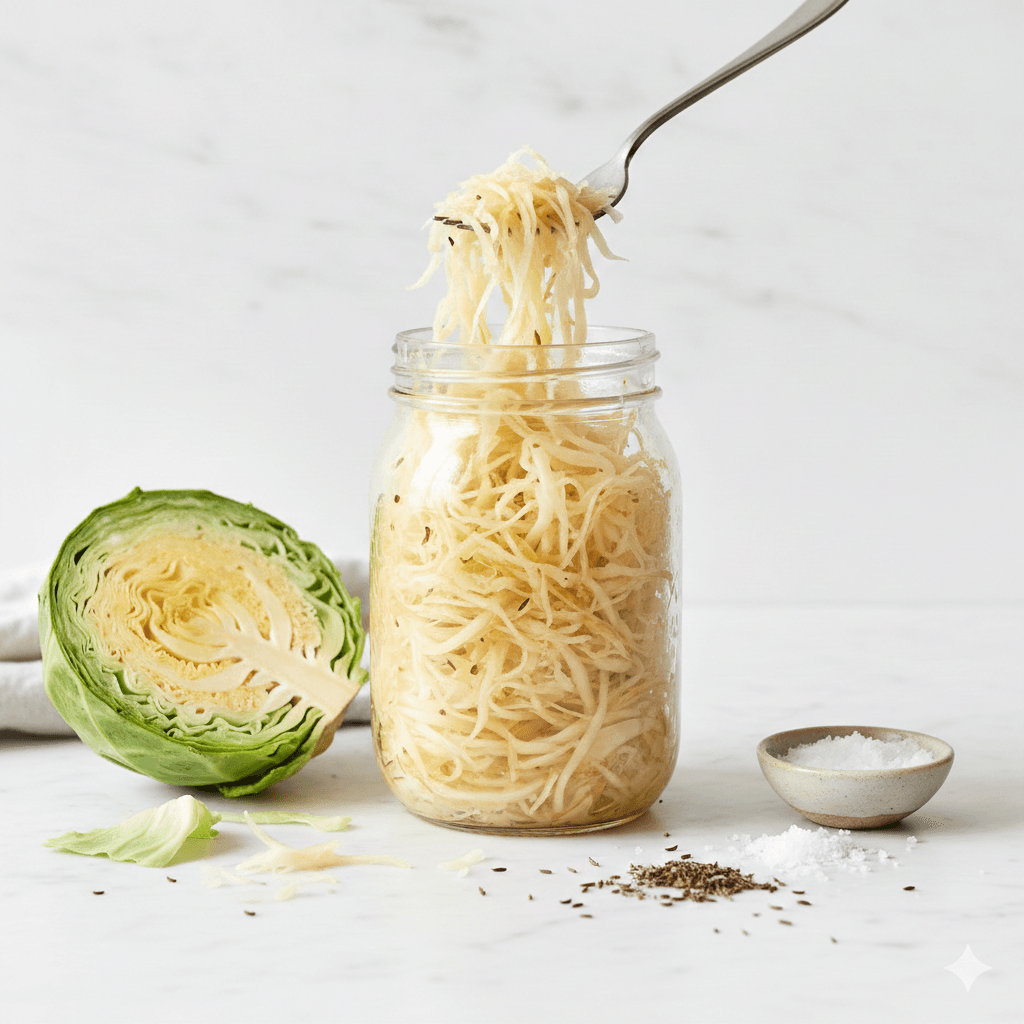
Sauerkraut — the perfect first ferment. Two ingredients (cabbage + salt), minimal technique, very forgiving. It teaches you the fundamentals: salting, massaging, submerging, and waiting. If you can make sauerkraut, you can make almost anything.
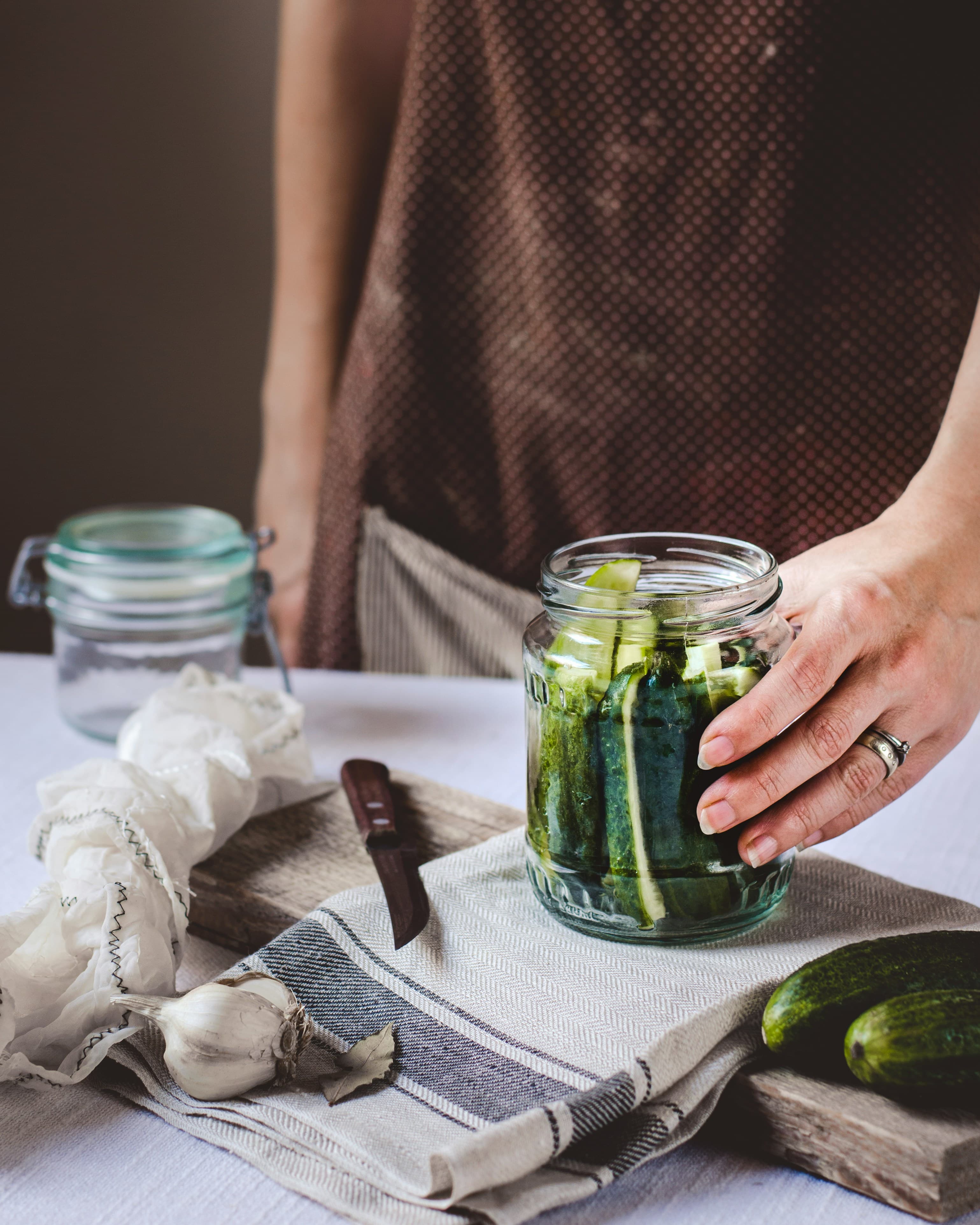
Fermented Pickles — your second project. This teaches you brine-based fermentation (vegetables submerged in salt water rather than dry-salted). Still very simple, and you get crunchy, tangy pickles that blow away anything from the store.
Fermented Garlic Honey — three ingredients, ten minutes of work. This one shows you how fermentation works in a completely different medium (honey instead of brine) and produces an addictive condiment.
Kimchi — once you're comfortable with the basics, kimchi is the next step. It's more involved (multiple ingredients, a paste, brining) but the process is the same as sauerkraut with more flavors layered in.
💡 Start one project at a time
It's tempting to start five ferments at once, but resist the urge. Do one project, see it through, taste the results, and learn from it before moving on. Each ferment teaches you something that makes the next one easier.
Common Beginner Mistakes
Using the wrong salt
Table salt often contains iodine and anti-caking agents that can interfere with fermentation and leave a metallic taste. Use sea salt, kosher salt, or pickling salt — anything without additives.
Not using enough salt
Under-salting is the most common cause of mushy, slimy, or off-tasting ferments. For most vegetable ferments, aim for 2–3% salt by total weight. Use a kitchen scale — measuring by teaspoons is unreliable because different salts have different densities.
Opening the jar too often
Every time you open the jar, you introduce oxygen and potentially contaminants. Check on your ferment once a day at most. Burp the lid if pressure builds up, push vegetables down if they're floating, and then leave it alone.
Panicking about bubbles or cloudiness
Bubbles are good — they mean the bacteria are active and producing CO2. Cloudy brine is also completely normal and actually a sign of healthy fermentation. The things to watch for are fuzzy mold on the surface, foul smells (not just sour — actually rotten), or pink/slimy brine.
Giving up too early
Fermentation takes time. Sauerkraut needs at least a week, and really shines at 3–4 weeks. Many beginners taste at day 3, decide it's not sour enough, and give up. Let it work. The transformation happens slowly, and patience is always rewarded.
Is Fermented Food Safe?
Yes. In fact, fermented food is one of the safest forms of food preservation. The acidic environment created during fermentation actively prevents the growth of harmful bacteria like botulism, E. coli, and salmonella. There has never been a documented case of foodborne illness from properly made vegetable ferments.
The key phrase is “properly made.” That means: use enough salt, keep vegetables submerged, and trust your senses. If something looks, smells, or tastes wrong — discard it. But in practice, the process is extremely reliable and self-correcting. The good bacteria outcompete the bad ones, and the acid they produce makes the environment inhospitable to pathogens.
Humans have been fermenting food for thousands of years without refrigeration, lab equipment, or food safety certifications. Your ancestors figured this out. You can too.
Ready to Start?
You now know more about fermentation than 95% of people. The rest is hands-on. Pick a project from the list above, gather your ingredients, and get started. Your first batch won't be perfect — and that's fine. Each one gets better, and the learning is part of the fun.
Browse all of our step-by-step fermentation guides to find your next project, or check out the tools we recommend to set up your fermentation station.