What Is Fermented Salsa?
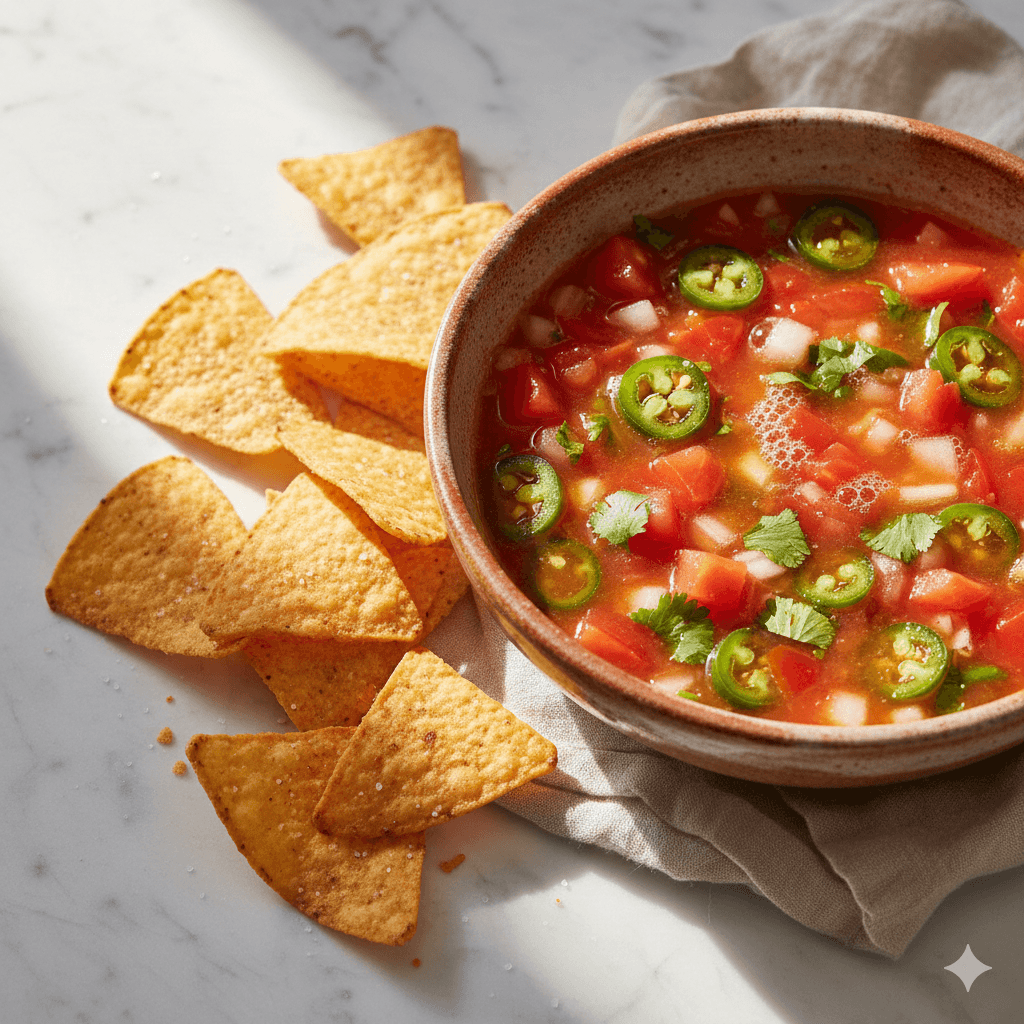
Fermented salsa is exactly what it sounds like — your favorite fresh salsa, but given a few days to transform through lacto-fermentation. The same friendly bacteria that make sauerkraut and kimchi go to work on your tomatoes, onions, and peppers, producing lactic acid that gives the salsa a bright, tangy edge you can't get any other way.
The result is a salsa that's more complex, slightly effervescent, and genuinely good for your gut. The fermentation mellows the raw bite of the onion and garlic, deepens the tomato flavor, and adds a subtle funk that makes every chip dip feel like a revelation. Once you try it, regular salsa starts to feel a little... flat.
Best of all, it's absurdly easy. If you can chop vegetables, you can make fermented salsa. No special skills, no fancy equipment, and the whole active process takes about 20 minutes. Then you just wait.
🧂 Why non-iodized salt matters
Iodine is antimicrobial — it's literally designed to kill bacteria. That's great for wound care, terrible for fermentation. Use sea salt, kosher salt, or pickling salt. Never iodized table salt.
Step by Step
Dice the tomatoes. Core the tomatoes and chop them into a small dice — roughly 1/4 to 1/2 inch pieces. Don't worry about being precise. You want them chunky enough to have texture but small enough to scoop with a chip. Drop them into a large mixing bowl and let them start releasing their juices.
Add the aromatics. Toss in the diced onion, minced jalapeño, garlic, and chopped cilantro. Squeeze in the lime juice. At this point it looks (and smells) like a regular fresh salsa. That's because it basically is — the magic happens in the jar.
Salt and mix. Add the sea salt and stir everything together thoroughly. Let it sit for 10 minutes — the salt will draw liquid out of the tomatoes and create a natural brine. This is the key to a successful ferment. You should see a nice pool of juices forming at the bottom of the bowl.
Pack the jar. Spoon the salsa into a clean mason jar, pressing down firmly with a spoon or your fist after each addition. The liquid should rise above the solids. Leave about an inch of headspace at the top — fermentation produces CO2 and things will expand. Place a fermentation weight on top to keep the salsa submerged under its own brine.
Cover and ferment. Place a loose lid on the jar (don't screw it tight — gas needs to escape) or use a clean cloth and rubber band. Set the jar on your counter, out of direct sunlight, at room temperature (65–75°F / 18–24°C is ideal). You'll start seeing tiny bubbles within 24–48 hours. That's the fermentation working.
Taste and wait. Start tasting after 2 days. The salsa will get tangier each day. Most people find the sweet spot between days 2 and 5 — tangy but not sour, with a pleasant fizz. Warmer kitchens ferment faster, cooler ones take longer. Trust your taste buds. When it tastes right to you, it's done.
Refrigerate and enjoy. Once the salsa hits your preferred level of tang, seal the jar tightly and move it to the fridge. Cold temperatures slow fermentation to a crawl, locking in the flavor. It'll keep for 2–3 weeks in the fridge (though it rarely lasts that long). Give it a stir before serving — the flavors continue to develop and meld even in cold storage.
💡 Not enough brine?
If the liquid doesn't fully cover the salsa after packing the jar, dissolve 1/2 teaspoon of salt in 1/4 cup of water and add just enough to cover. Everything needs to stay submerged — exposed veggies above the brine line are where mold gets ideas.
⏱️ The 2-day taste test
Fermented salsa moves faster than you'd think, especially in warm weather. Start tasting at 48 hours. If you let it go too long, it can get very sour — still safe, just aggressively tangy. You can always ferment longer, but you can't un-ferment.
Flavor Variations
The basic recipe above is a crowd-pleaser, but once you've got the technique down, the variations are endless:
- Roasted salsa — Char the tomatoes, jalapeños, and garlic under a broiler before chopping and fermenting. Adds a deep, smoky sweetness.
- Pineapple salsa — Add 1 cup diced pineapple. The natural sugars give the bacteria extra fuel, and the result is a tangy-sweet salsa that's incredible on fish tacos.
- Tomatillo salsa verde — Swap tomatoes for tomatillos. The natural tartness of tomatillos pairs beautifully with fermentation. Add a serrano pepper for heat.
- Mango habanero — 2 mangos + 1 habanero + red onion + lime. Fruity, floral, and seriously spicy. Ferments beautifully in 2–3 days.
- Smoky chipotle — Add 1–2 chipotles in adobo sauce to the mix before fermenting. The smokiness deepens as it ferments.
- Black bean & corn — Stir in cooked black beans and fresh corn kernels after fermentation (not before — the starches can cause off flavors). Best of both worlds.
Troubleshooting
The salsa is too watery
Tomatoes are full of water, so some liquid is expected. If your salsa is swimming, try using Roma or paste tomatoes next time — they have more flesh and less juice. You can also drain off some brine before serving (save it — fermented tomato brine is an incredible cocktail mixer or salad dressing base). Seeding your tomatoes before dicing also helps reduce excess liquid.
It's not fermenting (no bubbles)
Give it time — sometimes it takes 48 hours to get going, especially in cooler kitchens. Make sure you used non-iodized salt (iodized salt kills the good bacteria). Check that the jar is at room temperature, not in a cold spot. If nothing happens after 3 days, your salt ratio might be too high. Add a splash of water to dilute the brine slightly and give it another day.
It tastes too sour
You fermented too long — next time, pull it earlier. The good news: overly sour salsa is still perfectly safe. You can rescue it by stirring in fresh diced tomato, a squeeze of lime, a pinch of sugar, or a diced avocado. The fresh ingredients balance the acid and bring it back to life. Or just use it as a taco sauce where the extra tang is a feature, not a bug.
White film on top
That's almost certainly kahm yeast — a harmless film that sometimes forms on the surface of ferments. It looks like a thin white layer and is totally safe. Skim it off, make sure your fermentation weight is keeping everything submerged, and carry on. If you see fuzzy, colored mold (green, black, pink), discard the batch and start fresh.
The salsa turned mushy
Over-fermentation can soften tomatoes past the point of pleasant chunkiness. Warmer temperatures speed this up. For a chunkier result, ferment for a shorter time (2–3 days max) and keep the jar in a slightly cooler spot. Using firmer, less-ripe tomatoes also helps them hold their structure during fermentation.
Love fermented condiments? Try fermented pickles for the same lacto-fermentation technique applied to cucumbers, or fermented hot sauce if you want to push the pepper fermentation further.
🌮 Beyond chips
Fermented salsa isn't just a dip. Spoon it over scrambled eggs, stir it into rice bowls, use it as a taco topping, mix it into grain salads, or thin it out with a little olive oil for an instant salad dressing. The tangy, complex flavor elevates just about everything.