Why Make Cheese at Home?
Cheese making feels like alchemy. You start with a pot of milk, add a few simple things, and end up with something completely different — creamy ricotta, stretchy mozzarella, or a sharp, crumbly cheddar. The process is genuinely fascinating and the results are genuinely delicious.
The barrier to entry is lower than most people think. You don't need a cheese cave or a dairy farm. A pot, a thermometer, some cheesecloth, and a gallon of milk will get you started. This guide covers two cheeses: a quick ricotta (no special ingredients, ready in 30 minutes) and a farmhouse cheddar (uses cultures and rennet, pressed and aged). Start with the ricotta to build confidence, then level up when you're ready.
Part 1: Quick Ricotta (30 Minutes)
This is the perfect first cheese. No cultures, no rennet, no aging. Just heat, acid, and time.
Heat the milk. Pour the milk into a large pot and heat over medium heat, stirring occasionally to prevent scorching. Bring it to 190°F (88°C) — just below boiling. You'll see steam and tiny bubbles forming around the edges. Use your thermometer to be precise.
Add the acid. Remove from heat. Add the vinegar or lemon juice and stir gently for 10 seconds, then stop. You'll see the milk begin to curdle almost immediately — white curds will separate from yellowish-green whey. Add the salt. Let it sit undisturbed for 10 minutes.
Strain the curds. Line a fine-mesh strainer with cheesecloth and set it over a bowl. Gently ladle the curds into the strainer. Let it drain for 5 minutes for a creamy, spreadable ricotta, or up to 30 minutes for a drier, crumbly texture. Don't press or squeeze — just let gravity do the work.
Enjoy. Transfer to a container and use immediately or refrigerate. Homemade ricotta is best within 3–5 days. Spread it on toast with honey and flaky salt, toss with pasta, or layer into lasagna.
💡 Save the whey
The leftover liquid (whey) is full of protein and has plenty of uses. Add it to smoothies, use it as the liquid in bread dough or pizza dough, cook rice or pasta in it, or use it to water acid-loving plants. Don't pour it down the drain.
Part 2: Farmhouse Cheddar (Aged)
Once you've nailed ricotta, this is the logical next step. It takes more time and a few specialty ingredients, but the process is deeply satisfying — and the result is real, aged cheese that you made yourself.
Warm the milk and add culture. Heat 1 gallon of whole milk in a large pot to 90°F (32°C). Sprinkle the mesophilic starter culture over the surface and let it rehydrate for 2 minutes, then stir gently with an up-and-down motion for 1 minute. Cover and hold at 90°F for 45 minutes. This step is called ripening — the bacteria begin acidifying the milk.
Add rennet and form the curd. Dilute 1/4 teaspoon of liquid rennet in 1/4 cup cool water. Add to the milk and stir gently for 30 seconds. Cover and let sit undisturbed at 90°F for 45 minutes. You'll know the curd is ready when you can make a clean break — insert a knife at an angle and lift. If the curd splits cleanly around the knife, it's set.
Cut, cook, and stir the curds. Cut the curd into 1/2-inch cubes using a long knife, making vertical cuts in both directions and then angled horizontal cuts. Slowly raise the temperature to 100°F (38°C) over 30 minutes, stirring gently every few minutes. The curds will shrink, firm up, and release more whey. Hold at 100°F for another 30 minutes, stirring occasionally.
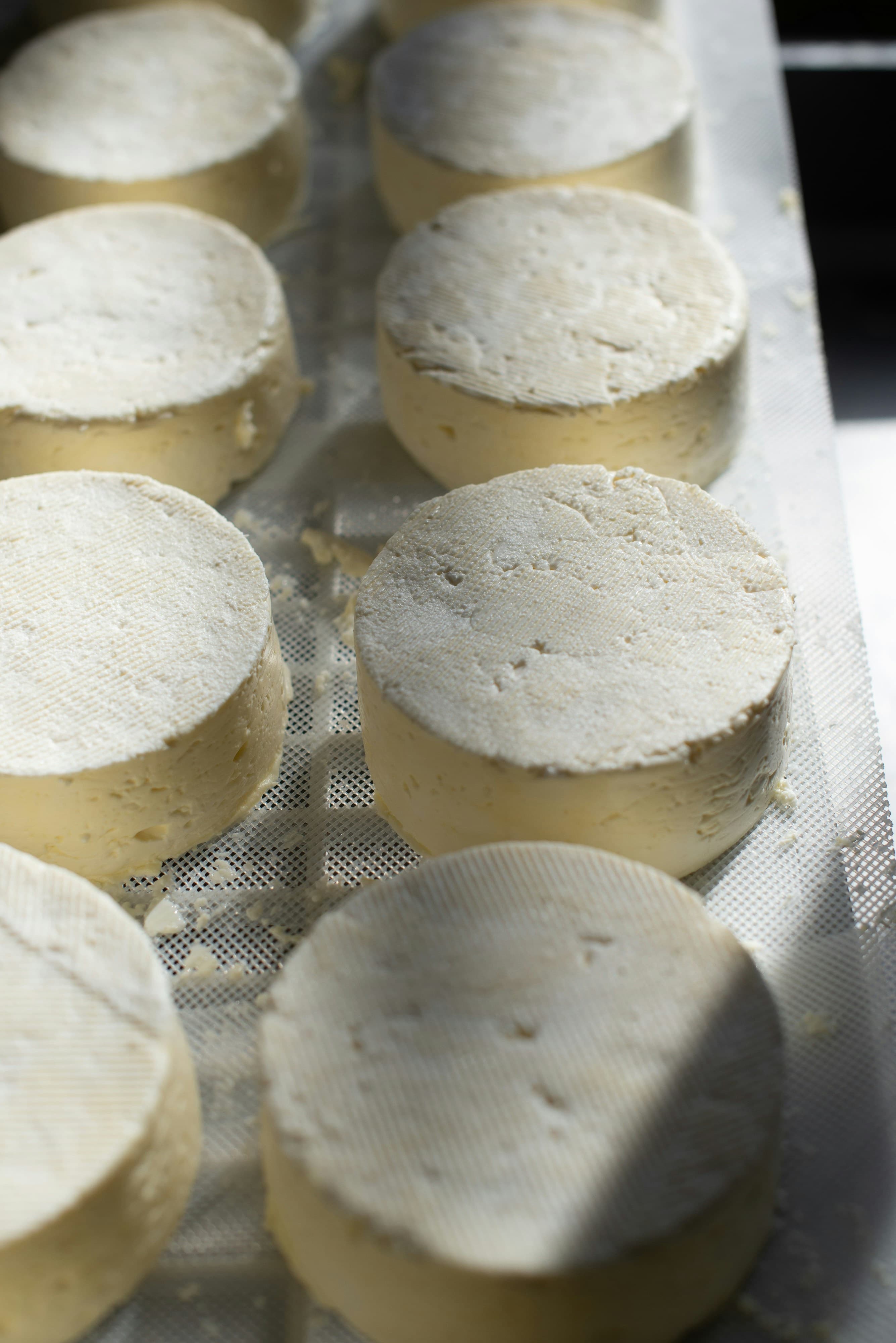
Drain, salt, and press. Pour off the whey through a cheesecloth-lined colander. Sprinkle 1 tablespoon of cheese salt over the curds and mix gently with your hands. Transfer the curds to a cheese press (or a cloth-lined mold with a weighted plate on top). Press at 10 lbs for 15 minutes, flip, then press at 20 lbs for 12 hours or overnight.
Air dry and age. Remove from the press and let the cheese air dry on a rack at room temperature for 2–3 days, flipping twice daily, until the surface feels dry to the touch. Once dry, coat in cheese wax or vacuum seal. Age in a cool spot (50–55°F / 10–13°C) — a wine fridge works great. Minimum 30 days, but 60–90 days gives you a sharper, more developed flavor. Flip weekly.
🌡️ Temperature and cleanliness matter
Cheese making is more precise than most fermentation projects. Use a thermometer at every step. Keep all equipment clean — unwanted bacteria can cause off-flavors or worse. Don't use ultra-pasteurized milk (the proteins are too damaged to form good curds) and avoid iodized salt (iodine inhibits the cultures).
Troubleshooting
The milk didn't curdle (ricotta)
You may not have used enough acid, or the milk wasn't hot enough. Make sure you hit 190°F before adding the vinegar. If it still won't curdle, add another tablespoon of vinegar and wait. Ultra-pasteurized milk sometimes won't curdle properly — check the label and use regular pasteurized or raw milk.
The curd won't set (cheddar)
The most common cause is old or improperly stored rennet — it loses potency over time, especially if stored at room temperature. Always keep rennet in the fridge. Also check that the milk wasn't ultra-pasteurized and that the temperature was right (90°F for mesophilic cultures).
The cheese tastes bland
Age it longer. Most homemade cheddar needs at least 60 days to develop real flavor. You might also need more salt — taste the curds before pressing and adjust. The culture also matters: make sure yours is fresh and within the expiration date.
There's mold on my aging cheese
Some surface mold is normal during aging, especially if you're not waxing. White or light mold can be wiped off with a cloth dampened with vinegar. If the cheese is waxed and mold is growing underneath, the wax seal may have a crack — re-wax that section. Extensive dark mold may mean the aging environment is too humid.
What Else Can You Make?
Once you've mastered these two, there's a whole world of cheese to explore:
- Mozzarella — stretchy, fresh, and fun to make (uses the same curding process but with a hot-water stretching step)
- Paneer — an Indian fresh cheese similar to ricotta but pressed into a firm block. Great for curries.
- Feta — brined cheese that uses the same mesophilic cultures as cheddar but is aged in salt water
- Gouda — washed-curd cheese with a sweet, nutty flavor. A step up in technique.
- Camembert — soft-ripened cheese with a white mold rind. An advanced project but incredibly rewarding.
Browse our recommended cheese making supplies for cultures, rennet, cheese salt, thermometers, and everything else you need to get started.
Cheese making pairs naturally with other dairy ferments. Homemade yogurt uses a similar bacterial culture process and is a great warm-up project. Milk kefir gives you a drinkable dairy ferment that also works as a substitute for buttermilk in baking. And when you have fresh ricotta or butter on hand, cultured butter is the perfect companion spread.