What Is Milk Kefir?
Milk kefir is a fermented milk drink that tastes like a tangier, thinner yogurt — somewhere between buttermilk and a drinkable yogurt. It's been made for thousands of years in the Caucasus Mountains, and it's one of the simplest ferments you can do at home.
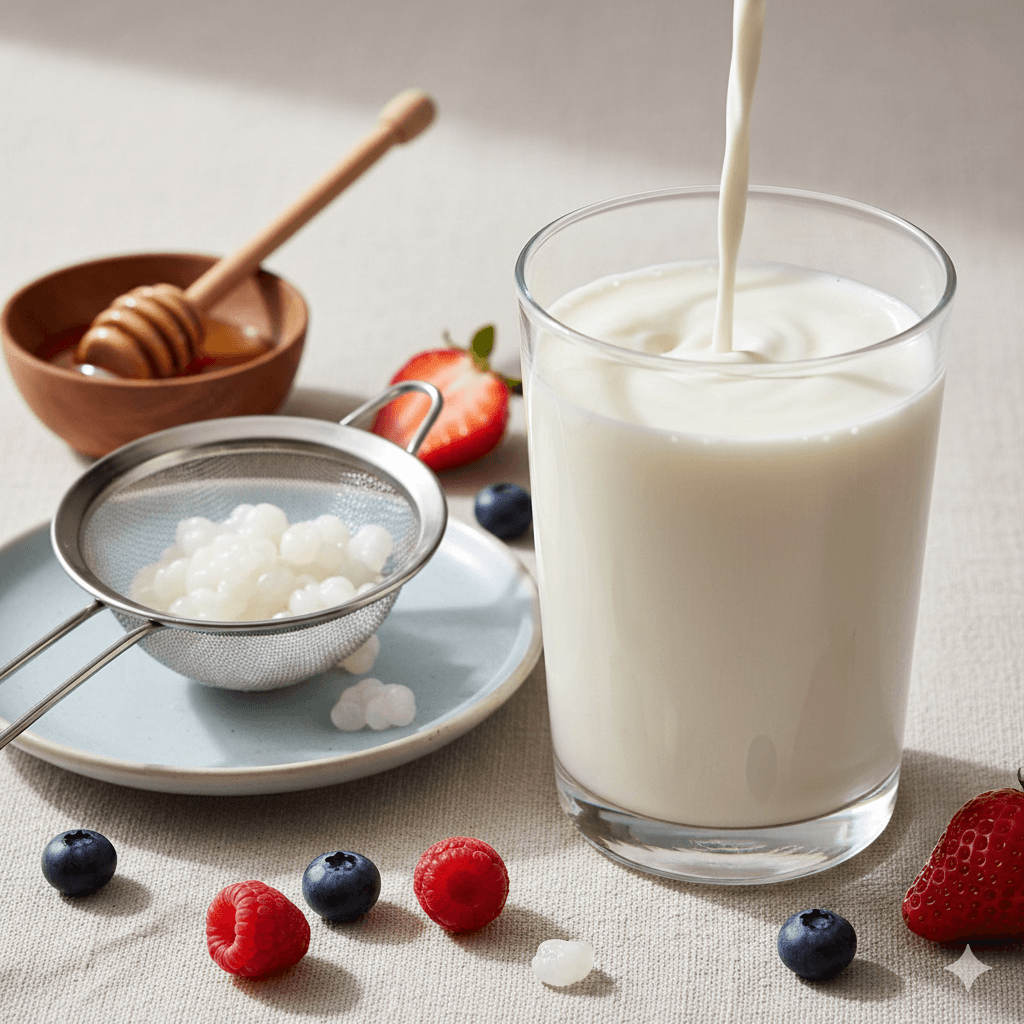
What makes kefir special is the culture itself. Kefir grains are small, rubbery clumps of bacteria and yeast that look a bit like tiny cauliflower florets. Unlike yogurt (which typically contains 2–7 strains of bacteria), kefir grains can contain 30–50+ strains of beneficial bacteria and yeast. That makes it one of the most probiotic-diverse foods you can eat.
The process is absurdly simple: add grains to milk, wait, strain. That's it. No heating, no temperature monitoring, no special equipment. If you're looking for your first ferment, this is a great place to start.
💡 Kefir grains vs. kefir starter
Real kefir grains are living colonies that you reuse indefinitely — they grow and multiply over time. Powdered “kefir starter” packets are freeze-dried cultures that work for a few batches and then die out. For long-term kefir making, you want real grains. They ship well and activate within a batch or two.
How to Make Milk Kefir
This is genuinely one of the easiest ferments in existence. Here's the whole process:
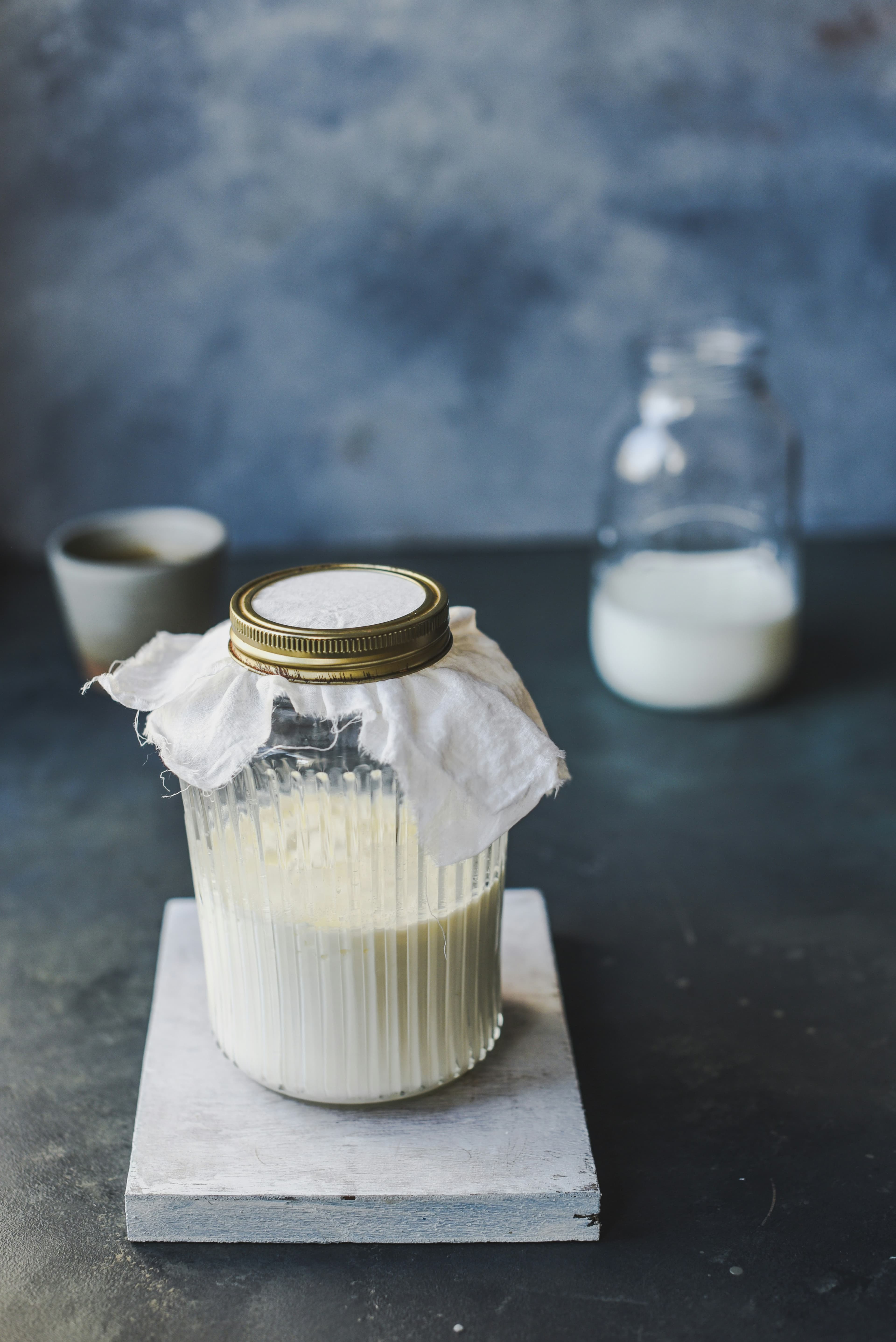
Add grains to milk. Place 1–2 tablespoons of kefir grains into a clean mason jar. Pour in 2–4 cups of whole milk. The ratio isn't super precise — roughly 1 tablespoon of grains per 1–2 cups of milk is a good starting point.
Cover loosely. Place a cloth, coffee filter, or loose lid on the jar. You don't need it airtight — a little airflow is fine. The fermentation produces a small amount of CO2, so don't screw a lid on tight.
Wait 12–24 hours. Leave the jar at room temperature (65–80°F / 18–27°C), out of direct sunlight. The milk will thicken and become tangy. At 12 hours, the flavor is mild and yogurt-like. At 24 hours, it's more sour and the texture is thicker. Taste it and find your sweet spot — literally.
Strain and enjoy. Pour the fermented kefir through a fine-mesh strainer into a clean jar or bowl. Gently stir or shake the strainer to help the kefir pass through. The grains stay behind in the strainer — they look the same as when you started, maybe a little bigger. That's your finished kefir in the jar below.
Start the next batch. Put the grains right back into a clean jar with fresh milk. That's it — the cycle continues. Your finished kefir goes in the fridge and keeps for 2–3 weeks (it'll slowly get more sour over time).
Where to Buy Kefir Grains (and What to Expect)
Kefir grains ship surprisingly well. They arrive dehydrated or in a small amount of milk, and typically activate within 1–3 batches. Here are the best ways to get them:
- Amazon — live milk kefir grains are widely available and reasonably priced (~$15–$20). Fermentaholics and Cultures for Health are reputable sellers.
- Local fermentation communities — healthy grains multiply quickly, so many home fermenters give extras away for free. Check Facebook groups, local Reddit fermentation threads, or SCOBY swap groups.
- Natural food stores — some specialty stores stock live kefir grains in the refrigerated section.
When your new grains arrive, they may look small or pale. Don't panic. Do your first batch, taste it (it may be weak), discard the kefir but keep the grains, and make a second batch. By batch 2–3 most grains are fully active and producing thick, tangy kefir.
Milk Kefir vs. Water Kefir — What's the Difference?
Both are fermented drinks made with kefir grains, but the grains themselves are different organisms producing different products.
- Milk kefir — made with dairy milk; tangy, creamy, yogurt-like; higher in protein; best for drinking plain, smoothies, or baking
- Water kefir — made with sugar water; lighter, more effervescent, dairy-free; easily flavored with juice or fruit; more like a sparkling probiotic soda
- Probiotic diversity — both contain dozens of bacterial and yeast strains; milk kefir tends to have slightly more overall microbial diversity
- Maintenance — milk kefir grains must be fed with dairy regularly; water kefir grains can go longer between feedings
Want to try water kefir too? See our water kefir guide — the process is similar but uses sugar water and produces a completely different drink.
How to Use Milk Kefir
Kefir is incredibly versatile. Here are some of the best ways to use it:
- Drink it straight — pour over ice, or chill it in the fridge first. Some people love it plain; others like it with a drizzle of honey.
- Smoothies — use kefir as the liquid base instead of milk or yogurt. It adds a creamy tang and a probiotic boost. Blends great with berries, banana, and a handful of spinach.
- Overnight oats — swap out milk or yogurt for kefir. The tang works beautifully with oats, chia seeds, and fruit.
- Salad dressing — blend kefir with herbs, garlic, lemon juice, and a pinch of salt for a creamy, probiotic ranch-style dressing.
- Baking — use kefir in place of buttermilk in pancakes, waffles, muffins, or biscuits. The acidity helps baked goods rise and keeps them tender.
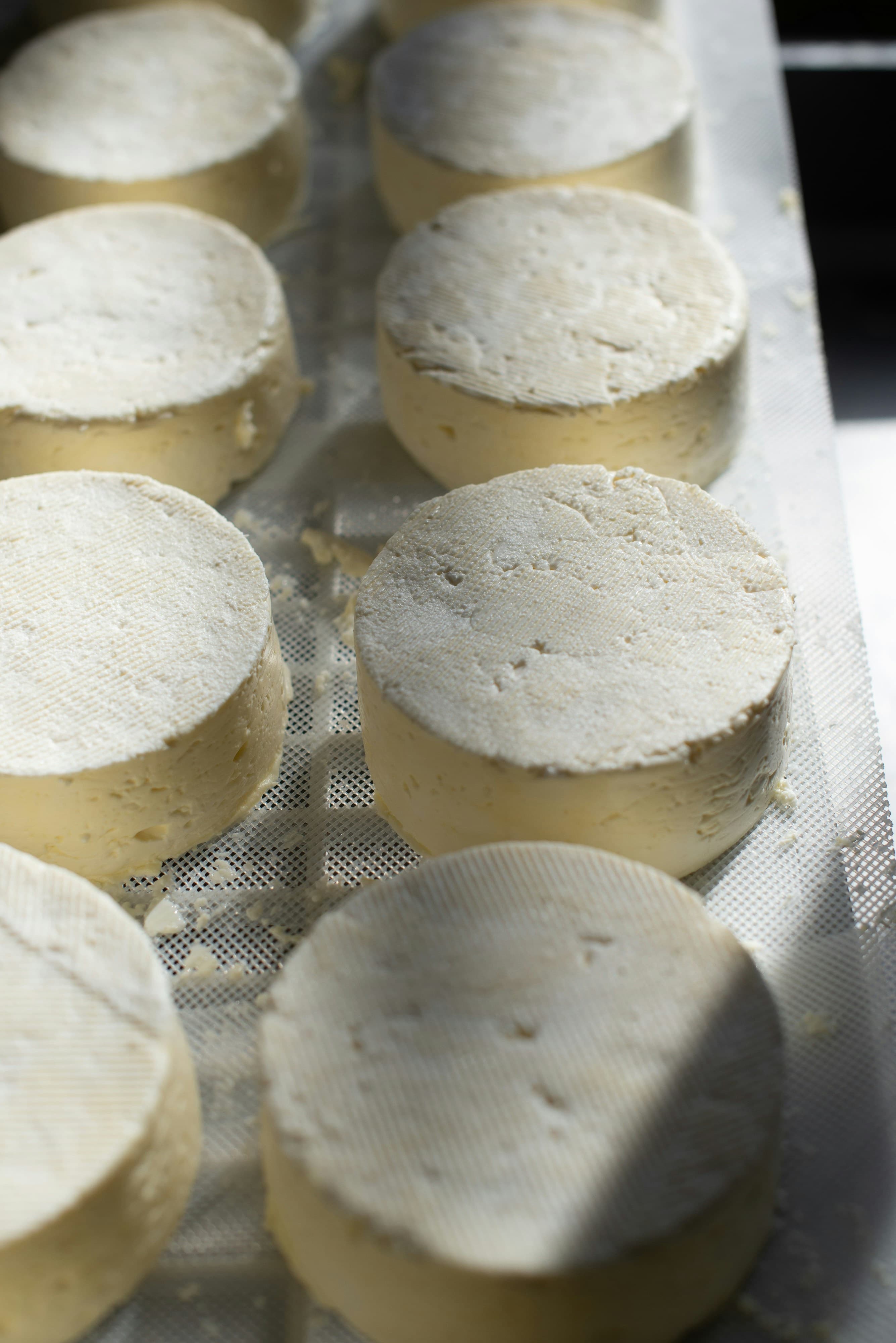
- Kefir cheese — strain kefir through cheesecloth for 12–24 hours and you get a soft, spreadable cheese similar to cream cheese or labneh. Season with herbs and salt. For more involved cheesemaking, see our homemade cheese guide.
- Pour over granola — treat it like yogurt. Top with granola, nuts, honey, and fresh fruit.
Caring for Your Kefir Grains
Kefir grains are remarkably resilient. They'll last indefinitely with basic care and multiply over time (you'll eventually have extras to share or compost). Here's what to know:
- Feed them regularly — The easiest approach is to start a new batch every 24 hours. If you need a break, put the grains in fresh milk and store them in the fridge. They'll slow down and be fine for 1–2 weeks without attention.
- Use whole milk for the healthiest grains — The fat and nutrients in whole milk keep grains happy. You can use 2% or skim, but the grains may shrink over time. Periodically “feed” them whole milk even if you normally use lower-fat milk.
- Room temperature is fine — Kefir grains are more forgiving than most fermentation cultures. They work in a wide range (60–85°F / 15–29°C), just faster when it's warmer.
- They grow over time — Healthy grains multiply. When you have more than you need, share with friends, blend extras into smoothies (they're edible and probiotic-rich), or compost them.
- Avoid ultra-pasteurized milk if possible — It works, but the high-heat processing changes the proteins and can slow grain growth. Regular pasteurized or raw milk is preferred.
🧊 Going on vacation?
Put your grains in fresh milk and store them in the fridge — they'll hibernate for up to 2–3 weeks. For longer breaks, rinse the grains gently, pat them dry, and freeze them in a small amount of milk. They can survive frozen for months. When you're ready to start again, thaw them in fresh milk — it may take 2–3 batches before they're fully active again.
💡 Can I use non-dairy milk?
You can, but with caveats. Kefir grains need lactose (milk sugar) to thrive long-term. You can ferment coconut milk, oat milk, or other alternatives, but you'll need to “refresh” the grains in regular dairy milk every few batches to keep them healthy. Some people keep two sets of grains — one for dairy, one for non-dairy — and rotate the non-dairy grains back into milk periodically.
Tips for Better Kefir
🎯 Dial in your flavor
The biggest variable is time. Shorter ferments (12–16 hours) give milder, creamier kefir. Longer ferments (20–24+ hours) give tangier, more sour kefir. Experiment until you find your preference. You can also adjust the grain-to-milk ratio — more grains = faster, tangier fermentation.
🥄 Second ferment for extra flavor
After straining, you can do a second ferment: add fruit, vanilla, honey, or cinnamon to the finished kefir, seal the jar, and leave it at room temperature for 6–12 hours. This adds flavor and can increase fizz. Then refrigerate. Try blueberries, mango, or a spoonful of jam.
🔄 Keep a steady rhythm
Kefir grains are happiest with a consistent routine. Try to strain and re-feed them around the same time each day. If your schedule is unpredictable, the fridge is your friend — it slows everything down and buys you flexibility.
Troubleshooting
My kefir is too sour
It fermented too long, or your grain-to-milk ratio is too high. Try shortening the ferment time (pull it at 12–16 hours instead of 24) or use more milk relative to grains. Warmer kitchens also speed things up, so you may need to adjust with the seasons. If it's already too sour, it's still perfectly safe — use it in smoothies or baking where the tanginess is a feature, not a bug.
My grains aren't growing
This is common in the first few weeks, especially if your grains were shipped or recently stressed. Give them time — it can take 2–4 weeks of regular feeding before they start visibly multiplying. Make sure you're using whole milk (the fat matters), and that your kitchen isn't too cold. If they've been sluggish for a month, try switching milk brands — some ultra-pasteurized milks just don't work well.
The milk separated into curds and whey
This means it over-fermented. You'll see thick white clumps (curds) and a yellowish liquid (whey). It's not harmful — just more sour than usual. Strain it as normal, give it a good shake or stir, and use it in smoothies. To prevent this next time, check it earlier or use less grains. Separation happens faster in warm weather, so keep an eye on timing during summer months.
It smells like yeast or alcohol
A mild yeasty smell is normal — kefir grains contain both bacteria and yeast. If it's very strong or boozy, the yeast may be dominating. This can happen if the grains are stressed or if you're fermenting in a very warm spot. Try a cooler location and make sure you're using enough milk relative to grains. A rinse of the grains in cool filtered water (just once) can also help reset the balance.