Why Make Yogurt at Home?
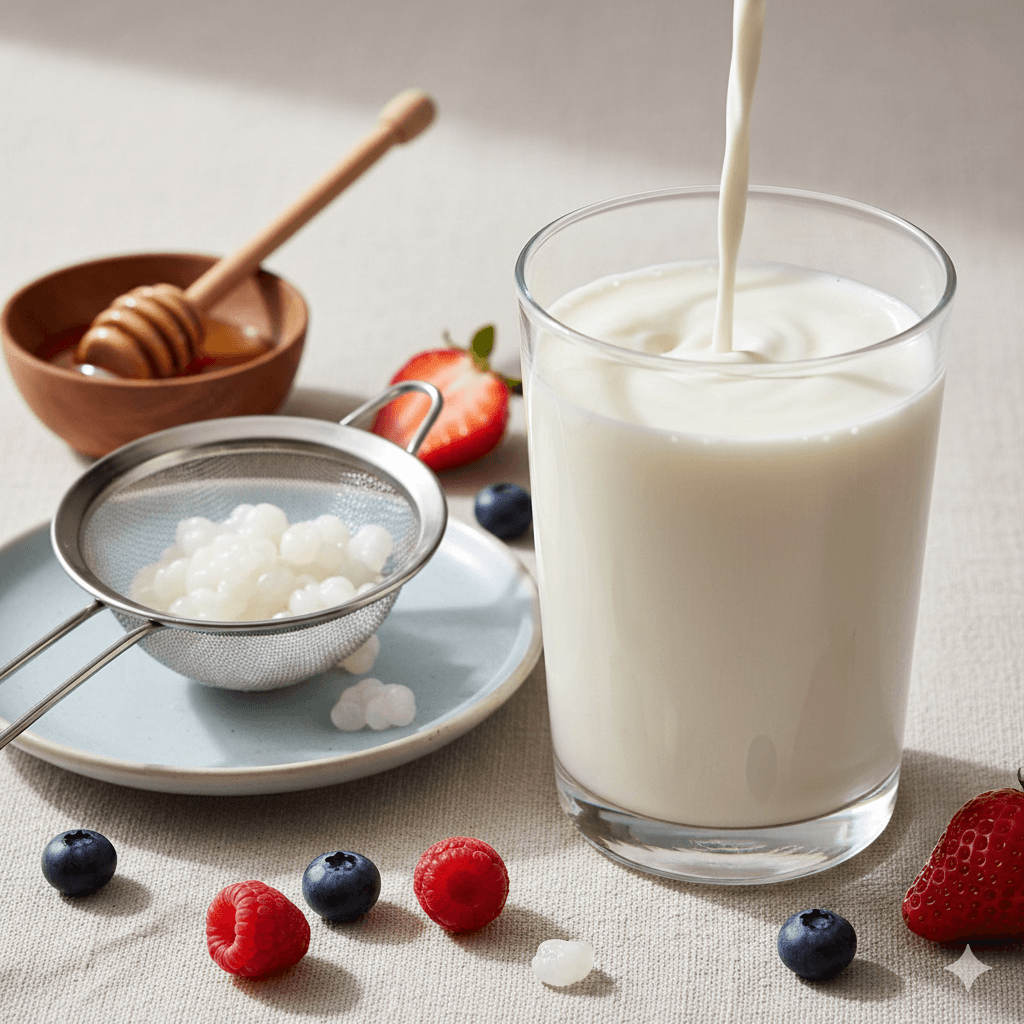
Homemade yogurt is one of those things that sounds fancier than it actually is. In reality, you're heating milk, stirring in a spoonful of yogurt, and keeping it warm overnight. That's it. The bacteria do the rest. If you want even more probiotic diversity with less effort, also check out milk kefir — no heating required.
So why bother? For starters, it's significantly cheaper than buying it — especially if you go through a lot of yogurt. You also get to skip the thickeners, stabilizers, sweeteners, and other additives that show up in most commercial yogurt. And you can customize everything: how thick it is, how tangy it gets, and what you mix into it. There's something genuinely satisfying about opening the fridge and finding a jar of yogurt you made yourself.
The Process
Heat the milk to 180°F (82°C). Pour the milk into your pot and heat it over medium heat, stirring occasionally to prevent scorching on the bottom. You're not just warming it up — heating to 180°F serves two purposes. First, it kills any competing bacteria that might interfere with your yogurt cultures. Second, it denatures the whey proteins in the milk, which helps the yogurt set up thicker and creamier. Don't skip this step, even if you're using pasteurized milk.
Cool the milk to 110°F (43°C). Remove the pot from the heat and let it cool. You can speed this up by placing the pot in an ice bath or a sink of cold water, stirring occasionally. This step matters — if the milk is too hot when you add the starter, it'll kill the bacteria. Too cool and the cultures won't activate properly. Use your thermometer here. Aim for 105–115°F (40–46°C), with 110°F being the sweet spot.
Add the starter yogurt. Scoop 2 tablespoons of plain yogurt into a small bowl. Add a few spoonfuls of the warm milk and whisk until smooth — this tempers the starter so it blends evenly. Then pour the mixture back into the pot of warm milk and stir gently. You don't need to stir vigorously — just enough to distribute the cultures throughout.
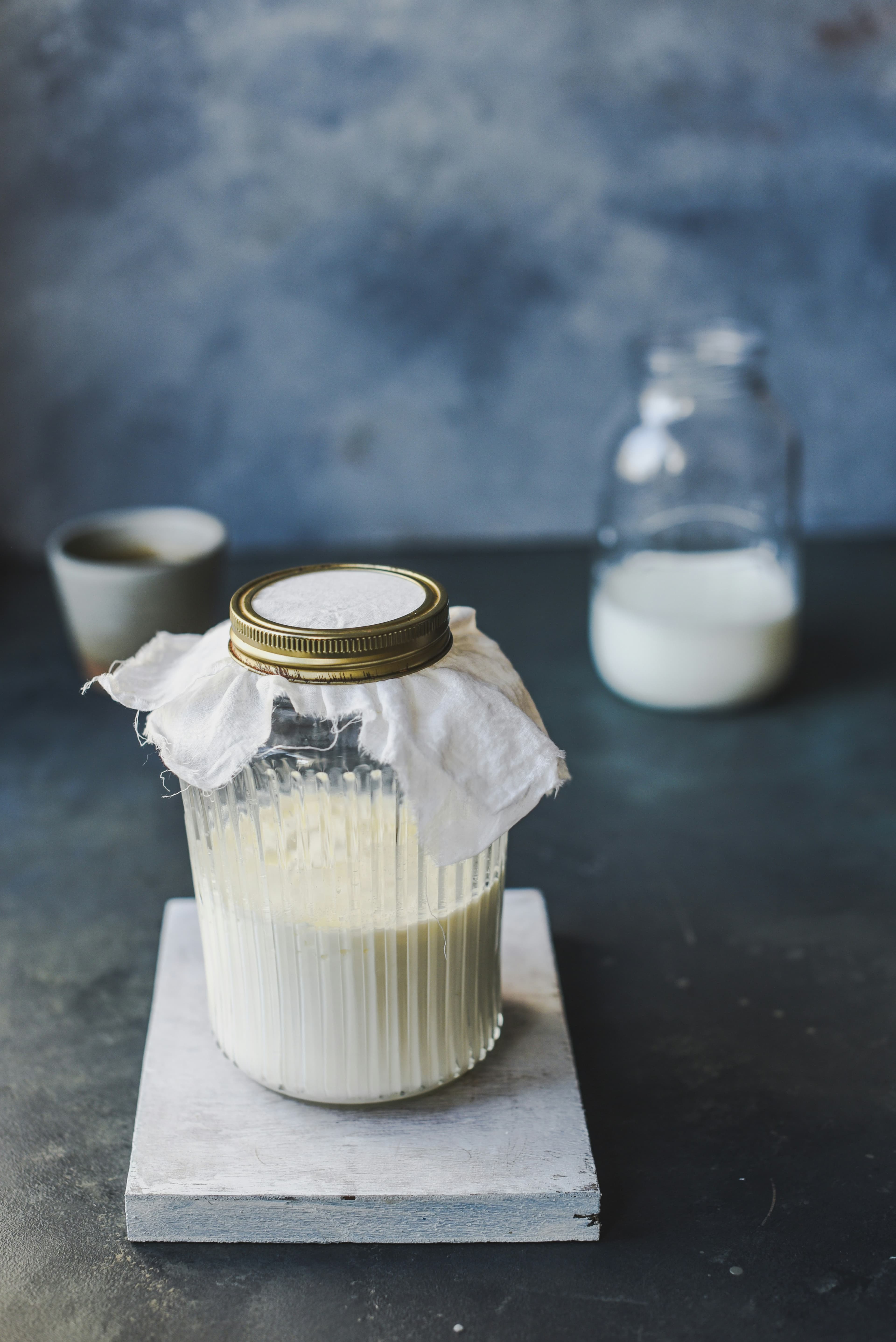
Keep it warm for 6–12 hours. Pour the inoculated milk into your jar or container and find a way to hold it at roughly 110°F for the fermentation period. Here are a few methods that work well:
- Oven with the light on — most oven lights generate enough heat to keep things in the 100–115°F range. Turn the oven off but leave the light on.
- Cooler method — place your jar in a small cooler alongside a jar of hot (not boiling) water. The insulation holds the temperature steady for hours.
- Towel wrap — wrap the jar in a thick towel and place it in a warm spot (on top of the fridge, near a radiator, etc.).
The longer you ferment, the tangier the yogurt. 6 hours gives you a mild, creamy yogurt. 8–10 hours is a nice middle ground. 12 hours or more gets you quite tart. Experiment and find your sweet spot.
Refrigerate. Once it's set, don't stir it — just put the lid on and move it straight to the fridge. It'll firm up more as it chills. Give it at least 4 hours in the fridge before eating for the best texture. You might see a little yellowish liquid on top — that's whey, and it's totally normal. You can stir it back in or pour it off.
Making Greek Yogurt
Greek yogurt is just regular yogurt with the whey strained out. That's literally it — the straining is what gives it that thick, rich, almost cream-cheese-like consistency.
To make it, line a fine-mesh strainer or colander with cheesecloth (or a clean flour sack towel or even a large coffee filter) and set it over a bowl. Pour in your finished yogurt and let it drain in the fridge. After 1–2 hours, you'll have thick Greek-style yogurt. Strain longer (4+ hours) and you'll get something closer to labneh — a spreadable yogurt cheese that's incredible with olive oil and herbs.
Don't toss the whey! It's packed with protein and probiotics. Use it in smoothies, bread dough, soups, or as a liquid replacement in pancake batter.
Flavor Ideas
- Honey and vanilla — a drizzle of honey + 1/2 tsp vanilla extract stirred in after chilling
- Berry compote — simmer berries with a touch of sugar until jammy, spoon on top
- Maple and granola — a spoonful of maple syrup and your favorite crunchy granola
- Savory — top with olive oil, za'atar, cucumber, and a pinch of flaky salt
- Tropical — diced mango, toasted coconut, and a squeeze of lime
- Peanut butter and banana — swirl in a spoonful of PB and top with sliced banana
🌡️ Temperature is everything
If there's one thing to obsess over, it's temperature. Too hot when you add the starter and you kill the cultures. Too cool during fermentation and the bacteria go dormant. An instant-read thermometer takes the guesswork out of both steps and costs less than a few cups of store-bought yogurt.
♻️ Save starter for the next batch
Before you add any flavoring or sweetener, set aside 2 tablespoons of your plain yogurt in a small jar. That's your starter for the next batch. You can keep this cycle going indefinitely — each batch becomes the mother of the next. Just make sure to use it within a week or two for the strongest cultures. If your batches start getting inconsistent after several generations, refresh with a new spoonful of store-bought.
Troubleshooting
My yogurt is runny and didn't set
The most common culprit is temperature. If the milk was too cool during fermentation, the bacteria couldn't do their job. Make sure your incubation setup actually holds 100–115°F — it's worth checking with a thermometer. Other possible causes: the starter yogurt was too old or didn't have live cultures, or you didn't heat the milk to 180°F first (this step is crucial for a good set). If it's still liquid after 12 hours, you can try straining it — it won't be perfect, but it's still usable in smoothies and baking.
It's too sour
You fermented too long, or the temperature was too high (or both). Warmer temps and longer times produce more acid. Try cutting back to 6–8 hours next time and make sure your incubation spot isn't running hotter than 115°F. Also, keep in mind that yogurt continues to develop a bit of tang in the fridge, so pull it slightly before your ideal tanginess.
The texture is grainy or lumpy
This usually happens when the milk was heated too quickly or cooled unevenly, causing the proteins to clump. Stir the milk gently while heating and make sure you cool it evenly. It can also happen if the starter wasn't mixed in thoroughly — always temper the starter with a bit of warm milk first before adding it to the full pot. Grainy yogurt is still safe to eat and works great in smoothies.
Ready to level up? Try making homemade cheese — the same culturing principles apply. Check out our recommended fermentation tools for thermometers, jars, and other gear that makes yogurt making easier.