Best Fermentation Crocks for Vegetables in 2026 (Tested)
Last updated June 16, 2026
Our top pick is the TOMO Fermentation Crock — but the right fermenting crock depends on your batch size and budget. We tested 5 water-sealed crocks for vegetable ferments (sauerkraut, kimchi, pickles) from $25 to $155. The water-seal lid is what makes them near-foolproof: CO2 bubbles out, mold and oxygen stay out, and there's no daily burping.
The Ferment Guide is reader-supported. When you buy through links on this page we may earn an affiliate commission, at no extra cost to you. We only recommend gear we'd use ourselves. Learn more.
TOMO Fermentation Crock (3L)
Our Top Picks

1. TOMO Fermentation Crock (3L)
What we like
- Includes two ceramic weights and a wooden tamper
- Water-seal design keeps oxygen and mold out
- Thick earthenware walls block UV light
- Handles sauerkraut, kimchi, and pickles equally well
- Compact 3L footprint fits on most counters
Watch out for
- 3L (~0.8 gallon) is smaller than the 5L sweet spot
- Newer brand without the German heritage pedigree
Our verdict: The TOMO checks every box that matters: a working water seal, two ceramic weights, and a wooden tamper for packing cabbage down tight — all for around $60. The thick earthenware walls block light and the seal keeps the ferment reliably anaerobic. At 3 liters it favors weekly batches over bulk ferments, but for most home fermenters this is the crock to get.
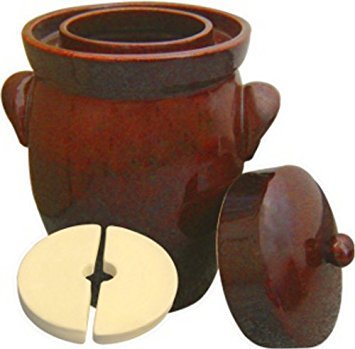
2. K&K Keramik Fermenting Crock (7L)
What we like
- Genuine German stoneware, hand-made and fired at 1260°C
- Deep water-seal gully for a truly anaerobic ferment
- Lead- and cadmium-free glaze
- 7L (1.9 gallon) capacity feeds a family of 3–4
- Side handles and a thick single-piece body
Watch out for
- Serious investment at ~$155
- Heavy — needs a permanent spot in your kitchen
- Overkill for small-batch or first-time fermenters
Our verdict: This is the genuine article: a hand-made German water-seal crock built to last generations. The deep gully keeps big batches strictly anaerobic — no cloth covers or daily skimming — and 7 liters comfortably handles family-scale sauerkraut and kimchi. It's the priciest crock on this page by a wide margin, but if you ferment in volume, it's a buy-once, hand-me-down piece.

3. Kenley Fermentation Crock (5L)
What we like
- Excellent price for a water-sealed crock
- Includes weights and lid
- 5-liter capacity — the sweet spot for most home fermenters
- Works well for sauerkraut, kimchi, and pickles
Watch out for
- Glaze finish isn't as refined as premium options
- Slightly thinner ceramic walls
Our verdict: The best entry point into crock fermentation. You get a proper water-sealed crock with weights at nearly half the price of premium options. The quality is solid for the price — a great choice if you want to try crock fermentation without a big investment.

4. Mortier Pilon Glass Fermentation Crock (2L)
What we like
- Clear glass lets you watch the fermentation process
- Sleek modern design
- Includes glass weight
- Water-sealed lid system
- Easy to clean — no staining
Watch out for
- Only 2-liter capacity — small batches only
- Glass is more fragile than ceramic
- Light exposure can affect some ferments
Our verdict: A beautiful glass crock that's perfect for beginners who want to see what's happening inside their ferments. The 2L size limits batch sizes, but it's ideal for experimenting with small quantities of sauerkraut, pickles, or kimchi.
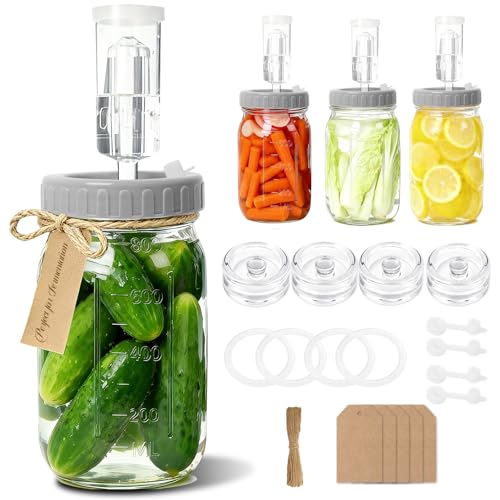
5. Wide-Mouth Mason Jars with Fermentation Lids
What we like
- Very affordable entry point
- Airlock lids prevent mold
- Compact — great for small kitchens
- Easy to find replacement jars
Watch out for
- Small capacity (32 oz per jar)
- Not a true crock — different fermenting experience
- Glass weights sold separately
- Multiple jars needed for a full batch
Our verdict: Not a crock in the traditional sense, but mason jars with airlock lids are the most accessible way to start fermenting vegetables. If you're not sure you'll stick with it, start here — you can always upgrade to a ceramic crock later.
What to Look for in a Fermentation Crock
Water-seal channel
The defining feature of a true fermentation crock. A moat around the rim holds water and creates an airlock — CO2 bubbles out, but oxygen and bugs can't get in. This is what separates a crock from a regular ceramic pot.
Ceramic weight stones
Good crocks include half-moon shaped weights that sit inside the crock and keep vegetables submerged below the brine. Without weights, you'll get mold on anything that pokes above the surface.
Size
A 5-liter (1.3 gallon) crock is the sweet spot for most home fermenters — big enough for a full head of cabbage but not so large that it takes over your counter. Go bigger (10L) if you ferment for a family or want to make large batches.
Glaze quality
Look for food-safe, lead-free glazes. German and Polish crocks are known for high-quality stoneware fired at high temperatures, which makes them non-porous and easy to clean.
Frequently Asked Questions
Related Guides
Homemade Sauerkraut
Two ingredients, one jar, and a week of patience. The simplest ferment there is.
🌶️How to Make Kimchi
A beginner-friendly guide to making traditional napa cabbage kimchi at home. No special equipment needed.
🔰Fermentation for Beginners
Everything you need to know to start fermenting at home. What it is, how it works, what you need, and which projects to try first.
Shop Related Equipment
Our top-rated gear picks for this project.
Best Fermentation Weights for Mason Jars & Crocks (2026)
We tested glass, ceramic, and stainless steel fermentation weights to find the best picks for wide-mouth mason jars and crocks — so your vegetables stay submerged and mold-free.
Best Fermentation Lids for Mason Jars in 2026
Fermentation lids turn any wide-mouth Mason jar into a proper fermenting vessel. We tested the most popular airlock lids to find the best options for beginners and experienced fermenters.
Best Vegetable Fermentation Starter Cultures in 2026
Starter cultures give your vegetable ferments a competitive advantage — flooding the jar with beneficial bacteria before unwanted microbes can take hold. We reviewed the top options for sauerkraut, kimchi, and vegetable brines.
The Ferment Guide is reader-supported. When you buy through links on this page, we may earn a small affiliate commission. This doesn't affect our recommendations — we only feature products we genuinely use and trust.