Rhubarb is one of the most polarizing plants in the garden. Raw, it's aggressively sour — oxalic acid and malic acid giving it a puckering tartness that most people can't eat straight. Cooked with sugar, it transforms into one of the great flavors of spring. But there's a third path that most people never try: fermentation. Fermented rhubarb is neither raw nor cooked. It's something else entirely — bright, complex, mellow enough to eat on its own, and alive with the kind of probiotic cultures that make fermented foods worth eating in the first place.
The fermentation process partially neutralizes rhubarb's harsh acidity while adding a different, more pleasant lactic acid tang. The result has depth that raw rhubarb lacks and more structure than stewed rhubarb. It's a genuinely unique ingredient — and it's only available in spring, which makes it worth making a batch or two when stalks appear at the market.
If this is your first time fermenting vegetables, start with our beginner's guide to home fermentation to get comfortable with the process before diving into this recipe.
Two Methods for Fermenting Rhubarb
Rhubarb can be fermented two ways, each producing a different result. The first is a classic lacto-fermentation in a salt brine — the same process used for fermented pickles and sauerkraut. The second is a honey fermentation, where raw honey acts as both sweetener and fermentation catalyst. Both are worth making, but they serve different purposes in the kitchen.
Method 1: Lacto-Fermented Rhubarb (Salt Brine)
Ingredients
- 3–4 rhubarb stalks (about 1 lb), washed and cut into 2-inch pieces
- 2 cups filtered water
- 1 tsp non-iodized sea salt (about 9–10g)
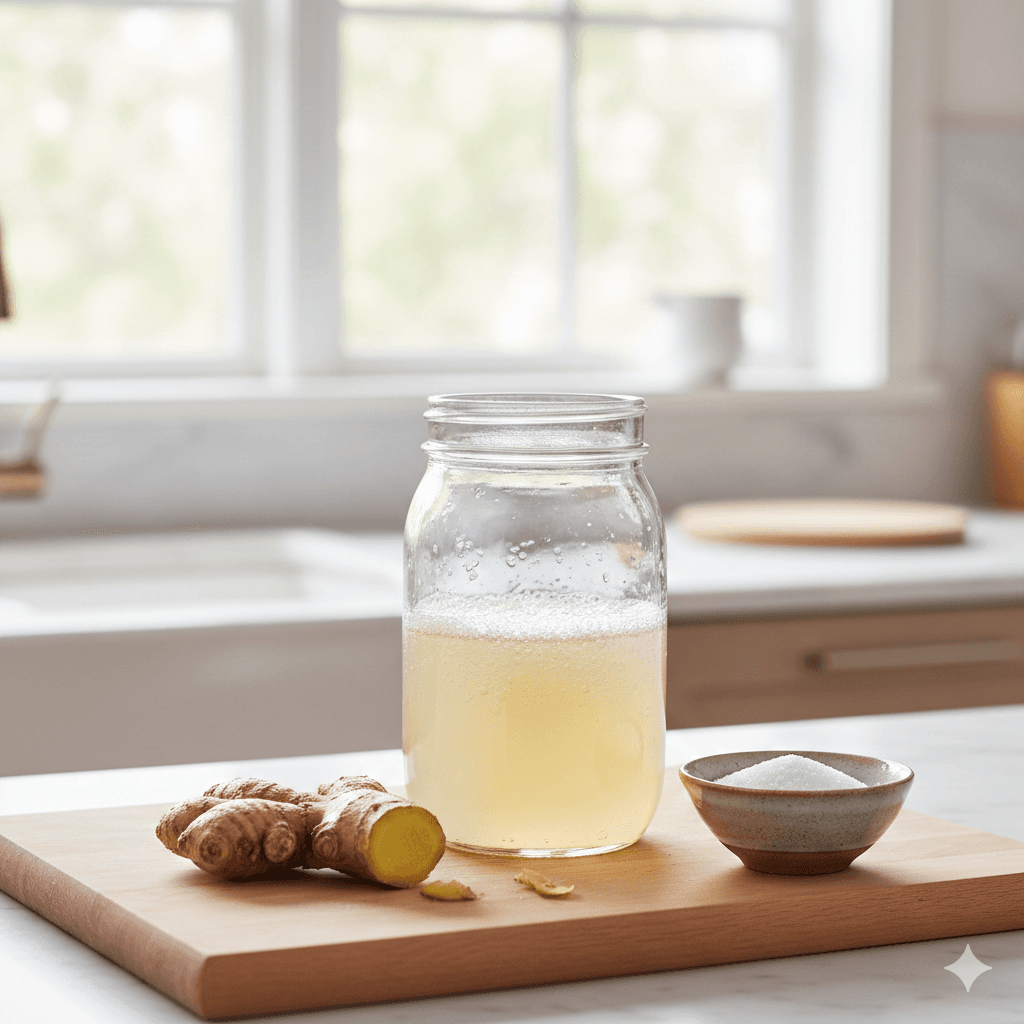
- 1 tsp fresh ginger, thinly sliced (optional but highly recommended)
- 1 small strip of orange peel (optional — adds floral brightness)
- 1 tbsp maple syrup or honey (optional — balances the tartness)
The ginger is technically optional, but rhubarb and ginger are one of those flavor combinations that seems designed by nature. The ginger adds warmth that softens rhubarb's aggressive sourness and makes the finished ferment considerably more complex. Don't skip it if you have fresh ginger on hand.
Instructions
Dissolve the salt in filtered water to make your brine. Add the sweetener if using — a small amount of sugar or honey gives the lacto-bacteria something to feed on and helps balance the final flavor.
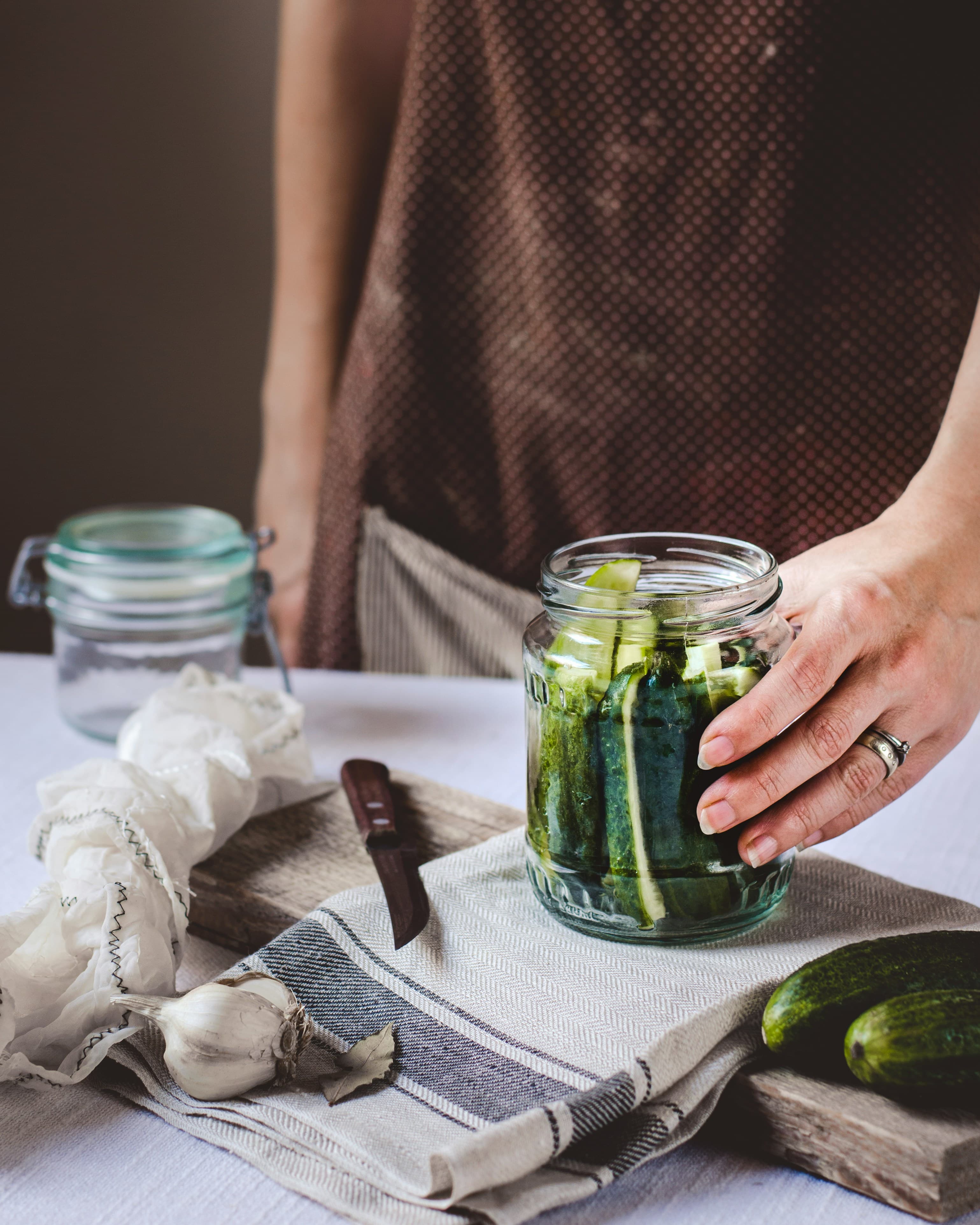
Cut the rhubarb into roughly uniform pieces and pack them into a wide-mouth mason jar along with the ginger and orange peel. Pour the brine over the rhubarb until it's fully submerged, leaving about an inch of headspace. The rhubarb will want to float — use a fermentation weight to keep it submerged below the brine line.
Cover loosely with a cloth or airlock lid and leave at room temperature — 65–75°F — for 2 to 4 days. You'll see bubbles forming as fermentation gets underway. Taste starting on day 2: the rhubarb should be tangier and slightly more mellow than raw. By day 4, it will be distinctly sour and complex. Move to the fridge when you're happy with the flavor.
Method 2: Honey-Fermented Rhubarb
Honey fermentation uses raw, unfiltered honey — which contains its own wild yeasts and enzymes — to slowly transform the rhubarb over a longer period. This is the same technique used for fermented garlic honey, adapted for a spring ingredient. The result is sweeter, more syrupy, and entirely different from the lacto version.
Ingredients
- 3–4 rhubarb stalks, cut into 1-inch pieces
- Raw, unfiltered honey — enough to fully cover the rhubarb (roughly equal in volume)
Important: Use raw honey only. Pasteurized honey has had its wild yeasts killed and will not ferment. Look for "raw" or "unfiltered" on the label.
Instructions
Pack rhubarb pieces into a clean jar and pour raw honey over them until fully covered. The honey will be very thick at first — use a chopstick or spoon to press the rhubarb down and coax out air bubbles. Seal loosely and leave at room temperature, turning or stirring daily.
Within a few days, the honey will thin dramatically as the rhubarb releases moisture. You may see fine bubbles — early fermentation. The flavor deepens over 2 to 4 weeks. The finished product keeps in the fridge for months, and both the rhubarb pieces and the rhubarb-infused honey are wonderful ingredients.
How to Use Fermented Rhubarb
The lacto-fermented version is more versatile in savory applications; the honey-fermented version is exceptional in sweet ones. Here's where each shines:
- On yogurt or oatmeal. A spoonful of either version transforms a plain bowl of yogurt into something special. The tartness and complexity that fermentation adds plays beautifully against the mildness of yogurt.
- Cheese boards. Lacto-fermented rhubarb alongside soft cheeses — especially chèvre or creamy brie — is an outstanding combination. The acidity cuts the fat and the floral notes complement the cheese.
- Cocktails. The honey-fermented rhubarb and its syrupy honey are excellent in spring cocktails. Muddle into a gin drink or add a spoonful to sparkling water for a sophisticated mocktail.
- Toast and pancakes. Honey-fermented rhubarb on buttered toast or over sourdough pancakes is one of the best breakfasts of spring. The sweetness from the honey balances the rhubarb perfectly.
- Salad dressings. A tablespoon of the lacto brine, whisked with olive oil, makes a naturally fermented vinaigrette with no vinegar needed.
What About the Salt and Rhubarb's Oxalic Acid?
Rhubarb contains oxalic acid, which is why the leaves are toxic and the stalks taste so sharp. Fermentation does partially break down and neutralize some of this acid — which is one reason fermented rhubarb tastes considerably more approachable than raw. The salt concentration in a 2% brine also draws moisture out of the stalks, further changing their texture and flavor profile.
Always use non-iodized salt for fermentation. Iodized table salt contains compounds that can inhibit the beneficial bacteria you need. Our guide to salt for fermentation explains exactly which salts work and which to avoid.
Storage and Shelf Life
Lacto-fermented rhubarb keeps in the fridge for 2 to 3 months. It will continue to sour slowly in cold storage — if you prefer a milder flavor, eat it within the first 3 to 4 weeks. Honey-fermented rhubarb, like most honey-based ferments, is remarkably shelf-stable and will last 3 to 6 months refrigerated.
For more spring fermentation ideas to pair with your rhubarb, take a look at our spring fermentation checklist — it covers the full range of what's worth fermenting right now.
Tips for best results
Choose firm, bright red stalks — older rhubarb with discolored ends will ferment unevenly. Filtered water is essential for lacto fermentation (tap water chlorine inhibits bacteria). Keep all rhubarb fully submerged at all times to prevent mold. And for the honey version, raw honey is non-negotiable — pasteurized honey simply won't ferment.