The most common question new kombucha brewers ask is: how long do I leave it? The honest answer is that fermentation time is a range, not a fixed number — it depends on your SCOBY, your temperature, your tea-to-sugar ratio, and most importantly, your personal taste. But there are reliable guidelines that will get you to great kombucha without guesswork.
This guide covers both stages: the first fermentation (F1), where sweet tea becomes kombucha, and the second fermentation (F2), where you add flavors and build carbonation.
First Fermentation (F1) — How Long?
Typical range: 7 to 14 days at room temperature.
Most batches hit their sweet spot somewhere in this window. Here's how fermentation progresses day by day:
- Days 1–3: The SCOBY settles and new culture begins to form on the surface. The liquid still tastes mostly like sweet tea. You may see bubbles forming around the SCOBY.
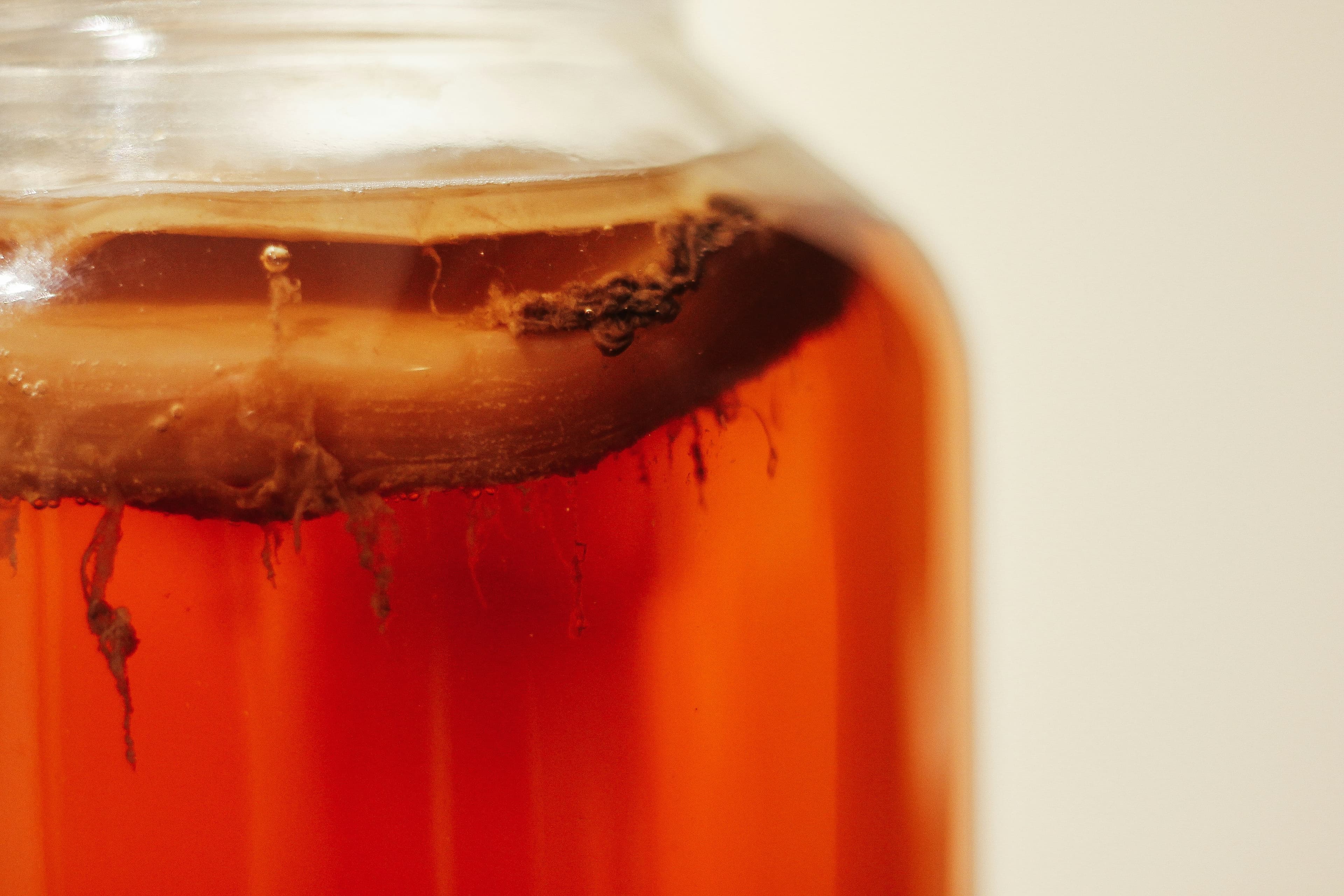
- Days 4–6: Acidity starts to develop. The liquid will taste noticeably less sweet and slightly tart. A thin new SCOBY layer (pellicle) is usually visible on the surface.
- Days 7–10: This is the typical harvest window for a balanced, pleasantly tart kombucha. It should taste lightly sweet, moderately acidic, and have a slightly vinegary quality without being sharp.
- Days 10–14+: Fermentation continues. The kombucha becomes increasingly acidic and less sweet. Some people prefer a very tart, more vinegary kombucha — this is a matter of preference, not a sign of a problem.
The best way to know if your kombucha is ready is to taste it starting around day 7. Use a clean straw, insert it below the new pellicle layer, and taste. If it's pleasantly tart and has lost most of its sweetness, it's ready to bottle. If it still tastes mainly like sweet tea, give it more time.
What Affects Fermentation Time
Temperature
Temperature is the single biggest variable. Kombucha ferments faster in warm conditions and slower in cool ones.
- 65–70°F (18–21°C): Slow fermentation. A batch may take 10 to 14 days — or longer in winter.
- 70–78°F (21–26°C): Ideal range. Most batches hit their sweet spot in 7 to 10 days.
- 78–85°F (26–29°C): Fast fermentation. Batches may be ready in 5 to 7 days, but yeast activity ramps up, which can make the flavor more vinegary and yeasty. Monitor closely.
- Above 85°F (29°C): Too hot. Fermentation becomes unpredictable and you risk stressing the culture. Keep kombucha out of direct sunlight and away from heat sources.
Starter Liquid Ratio
Starter liquid (reserved from your previous batch, or store-bought raw kombucha) acidifies the new batch immediately, which protects it from contamination and gives the culture a head start. More starter liquid = faster start, slightly faster fermentation overall. Standard ratio is 1 to 2 cups of starter per gallon of sweet tea.
SCOBY Health
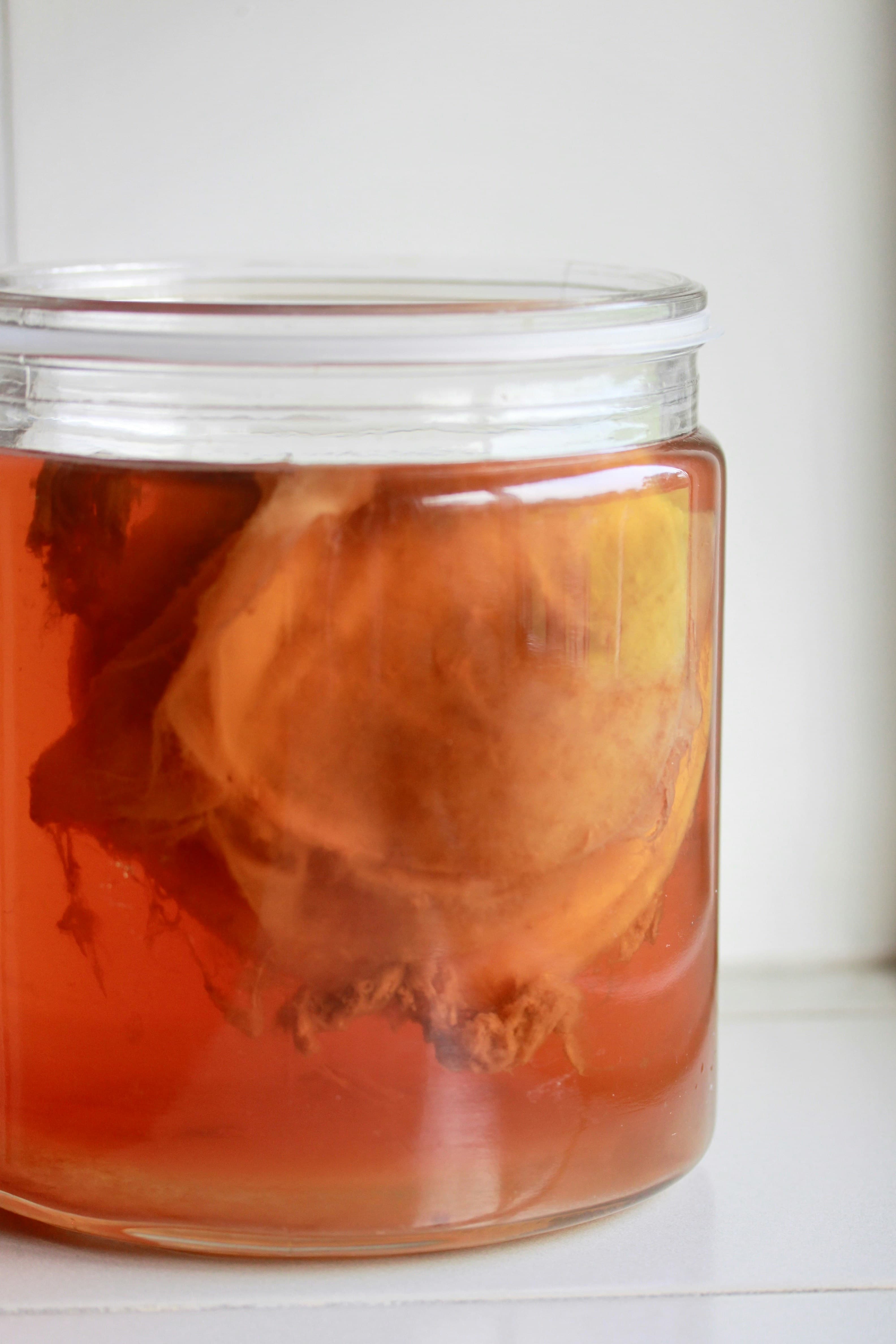
A thick, healthy SCOBY with active yeast strands will ferment faster than a thin, new, or weakened culture. If your kombucha is consistently taking longer than expected, check the health of your SCOBY. See our kombucha SCOBY guide for what a healthy culture looks like.
Sugar and Tea Type
Plain white cane sugar ferments most predictably. Alternatives like honey, coconut sugar, or maple syrup ferment more slowly and with different flavor results — honey especially, which is why jun kombucha (brewed with green tea and honey) has its own specific timing and culture. For more on that variation, see our guide to making jun kombucha.
Second Fermentation (F2) — How Long?
Typical range: 1 to 3 days at room temperature.
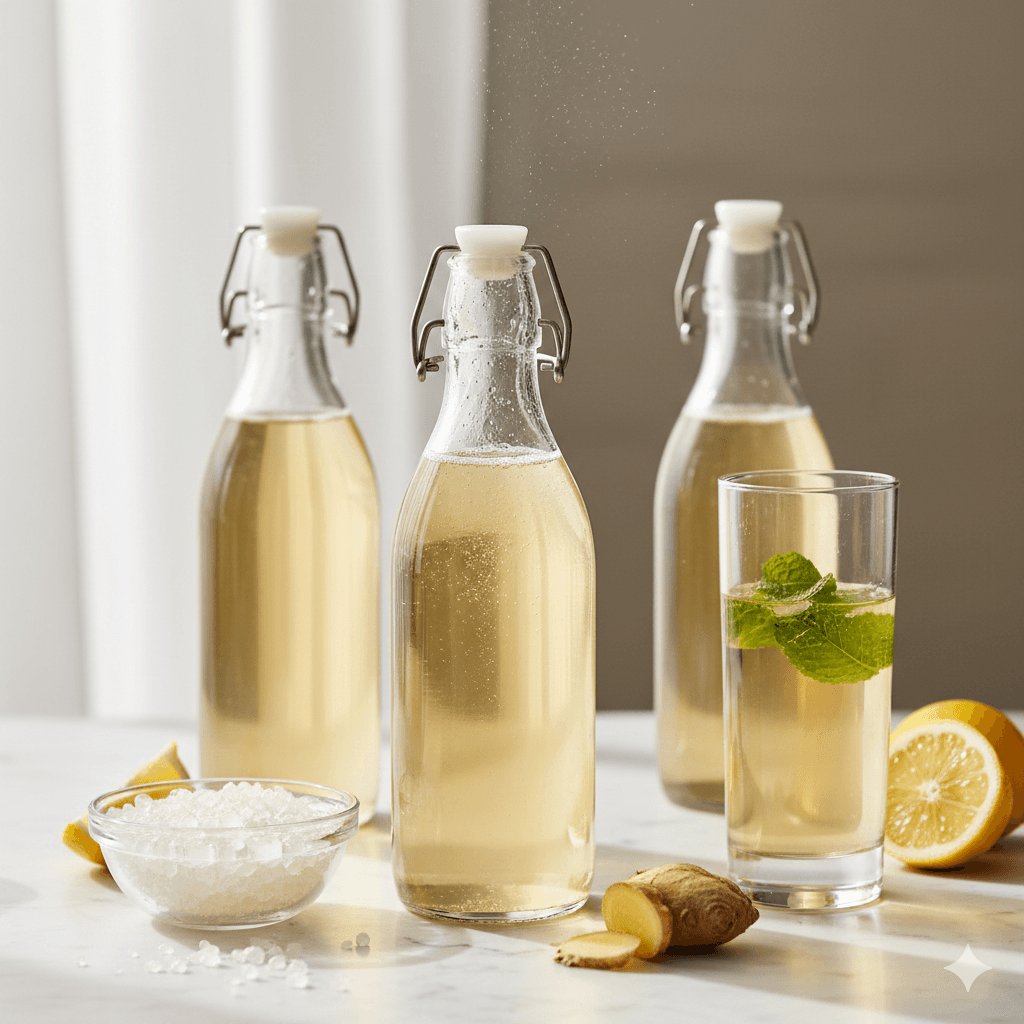
F2 is the bottling stage — you seal your kombucha with flavoring (fruit, juice, ginger, etc.) in airtight bottles to build carbonation. Unlike F1, F2 moves quickly.
- After 24 hours: Check for carbonation by gently cracking a bottle open over a sink. A strong hiss means it's nearly ready. A mild hiss means give it more time.
- After 48 hours: Most F2 batches at 72–75°F are fully carbonated by this point. Refrigerate immediately once the carbonation level is where you want it.
- After 72 hours: If it's still flat, your flavoring may not have had enough fermentable sugar. Add a small amount (½ tsp) of plain sugar to each bottle and reseal for another 24 hours.
For the best flavor combinations and carbonation tips, see our post on the best flavors for kombucha second ferment.
Refrigerate as soon as it's carbonated
Leaving carbonated kombucha at room temperature is the most common cause of over-carbonated bottles. Once you can hear a clear hiss when cracking the lid, move all bottles to the fridge immediately. Cold temperatures slow fermentation dramatically and lock in the carbonation level.
How to Know When Kombucha Is Done
There's no single correct moment when kombucha is "done" — fermentation is a continuum. But here are reliable sensory markers for a well-fermented F1 batch:
- Flavor: Tart, slightly vinegary, with only a hint of remaining sweetness. No longer tastes primarily like sweet tea.
- Smell: Pleasantly sour, like mild vinegar or a light sourdough note. Not unpleasant or chemical.
- Appearance: New pellicle visible on the surface (usually). Liquid slightly cloudy or with visible yeast strands floating — both completely normal.
If your kombucha smells unpleasant (rotten, cheesy, or strongly chemical) or shows fuzzy mold growth (distinct from the smooth, rubbery SCOBY surface), discard it. For a full troubleshooting guide, see our kombucha troubleshooting guide.
Can You Ferment Too Long?
Yes — though "too long" depends on taste. A batch that ferments for 3+ weeks at room temperature will become very acidic, essentially turning into kombucha vinegar. This isn't unsafe to consume, but most people won't enjoy drinking it straight. Kombucha vinegar can be used as a regular vinegar substitute in cooking and dressings, or added as starter liquid to acidify a new batch.
In practice, as long as you taste your batch starting around day 7, you'll catch it well before it tips into over-fermented territory. Trust your palate — it's the most reliable instrument you have.
Quick Reference
- F1 at 70–78°F: 7–10 days
- F1 at 65–70°F: 10–14 days
- F1 at 78–85°F: 5–7 days (monitor closely)
- F2 at 70–78°F: 1–2 days
- F2 at 65–70°F: 2–3 days
Ready to brew your first batch? Our complete guide to making kombucha at home walks through every step from getting a SCOBY to your first carbonated bottle.
For a complete walkthrough of the brewing process, the 1-gallon glass brewing jar is the go-to vessel for home kombucha brewers — wide-mouth, easy to clean, and the right size for a standard batch.