Kimchi is one of the most rewarding ferments a beginner can make. It comes together in about 30 minutes of active work, ferments in just a few days, and the result — a spicy, tangy, crunchy fermented cabbage — is genuinely better than anything you can buy at the store.
This recipe is a classic napa cabbage kimchi (baechu kimchi), the most common style. Once you've made it once, you'll understand the process well enough to adapt it endlessly.
Ingredients
- 1 medium napa cabbage (about 2 lbs / 900g)
- 2 tablespoons non-iodized salt — kosher salt or sea salt work well. Avoid iodized table salt — it can inhibit fermentation.
- 2–4 tablespoons gochugaru — Korean red pepper flakes. This is non-negotiable for traditional kimchi. Find it at Asian grocery stores or online.
- 4 garlic cloves, minced
- 1 teaspoon fresh ginger, grated
- 1 tablespoon fish sauce (or soy sauce for vegan)
- 1 teaspoon sugar — feeds the fermentation and balances flavors.
- 3–4 green onions, sliced into 1-inch pieces
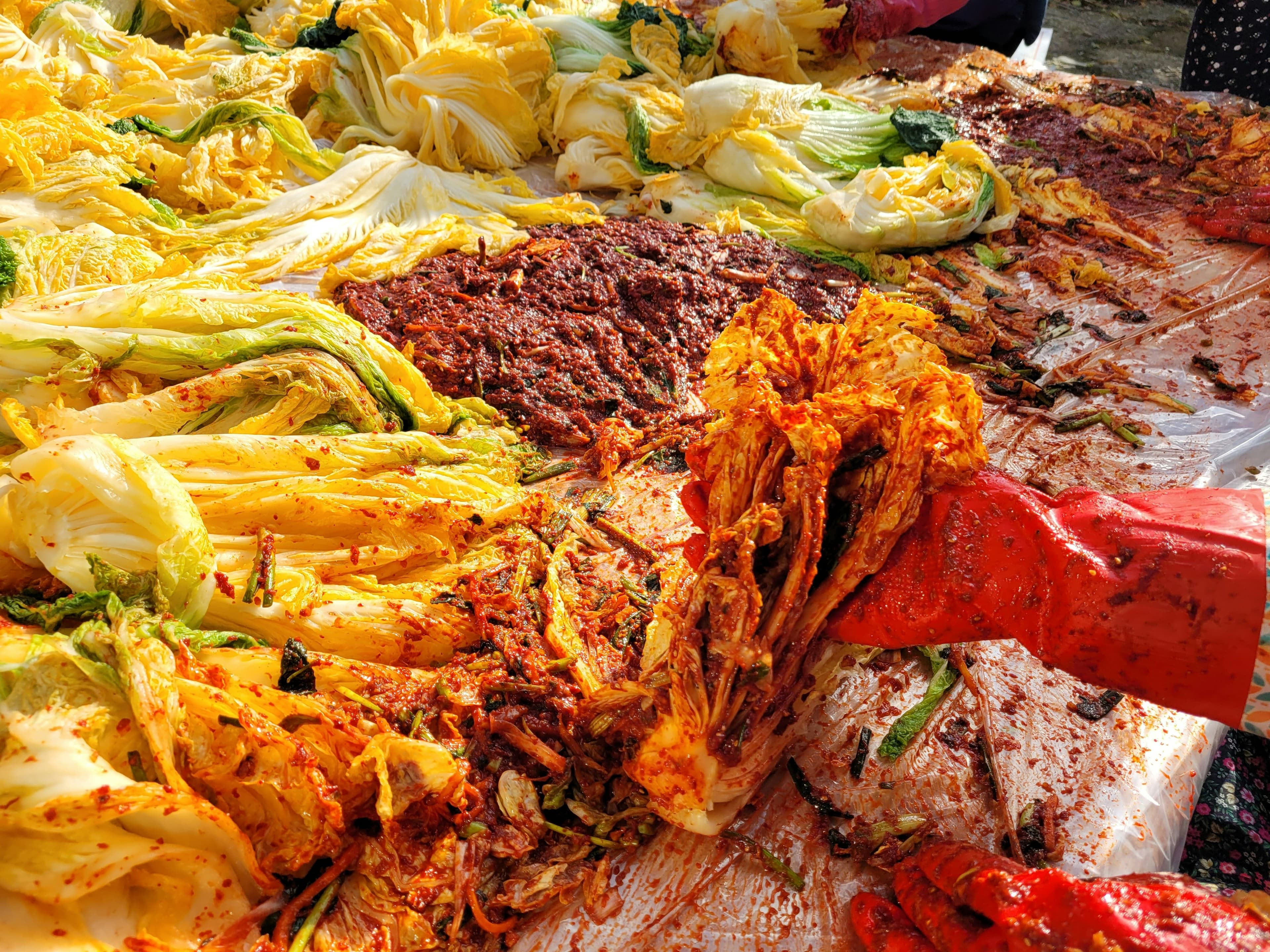
You'll also want gloves. Gochugaru stains everything — your hands, your cutting board, your countertop. Disposable gloves are your friend.
Step-by-Step Instructions
Step 1: Salt the Cabbage
Cut the napa cabbage into quarters lengthwise, then chop into roughly 2-inch pieces. Toss everything in a large bowl with 2 tablespoons of salt. Massage it briefly to coat, then let it sit for 1–2 hours. The salt draws moisture out of the cabbage, making it pliable and building the brine.
After 1–2 hours, the cabbage should be noticeably wilted and swimming in liquid. Rinse it thoroughly under cold water (2–3 rinses), taste a piece — it should be pleasantly salty but not overwhelming — then squeeze out as much water as you can. Set aside in a clean bowl.
Step 2: Make the Paste
In a small bowl, combine the gochugaru, minced garlic, grated ginger, fish sauce (or soy sauce), and sugar. Stir into a rough paste. Taste it. It should be intensely spicy, garlicky, and savory. If you want a milder kimchi, use 2 tablespoons of gochugaru; for a spicier result, use 4.
Step 3: Mix and Pack
Add the green onions to the drained cabbage. Put on your gloves. Add the paste to the cabbage and mix thoroughly with your hands until every piece is evenly coated.
Pack the kimchi tightly into a clean glass jar — a quart or half-gallon wide-mouth mason jar works perfectly. Press down firmly as you pack so the liquid rises to cover the vegetables. Leave about an inch of headspace at the top, because the kimchi will expand slightly as it ferments.
Step 4: Ferment
Leave the jar at room temperature — 65–75°F is ideal — for 1 to 5 days. Once or twice a day, press the kimchi down with a clean spoon or your fingers (gloves on) to keep the vegetables submerged under the brine. You may notice bubbling — that's the fermentation working.
Taste it daily. Fresh kimchi is crunchy and spicy with no sourness yet. After 1–2 days at room temperature it starts to develop tang. By day 3–5 it's noticeably sour and more complex in flavor. Move it to the fridge when it reaches the sourness level you like.
In a warm kitchen (above 75°F), fermentation happens faster — it may be ready in 1–2 days. In a cool kitchen (below 65°F), it may take 5+ days. Temperature is the biggest variable.
Step 5: Refrigerate and Wait
Once in the fridge, kimchi ferments very slowly. It continues to develop over weeks and months. Most people find it hits its stride around 1–2 weeks old — the flavors have mellowed and deepened, and it's still pleasantly crunchy.
By 1–3 months, kimchi is quite sour and funky. This is the ideal stage for kimchi jjigae (kimchi stew) or kimchi fried rice.
Storage
Store kimchi in the fridge in a sealed jar. Keep it submerged under its brine — if the level drops, you can make a small batch of 2% salt brine to top it up. Properly stored, homemade kimchi keeps for 3–6 months or longer. For more on refrigerating fermented foods, see our guide to storing fermented foods.
Troubleshooting
Kimchi isn't fermenting (no bubbles, no sourness): The kitchen may be too cold. Move it somewhere warmer, or wait a bit longer and taste again at day 3.
Kimchi is too salty: It was either not rinsed enough after salting, or the paste had too much fish sauce. Next time, rinse more thoroughly and taste the cabbage before mixing in the paste.
White film on top: This is likely kahm yeast, not mold. Skim it off, press the kimchi down, and the ferment beneath is still fine. Fuzzy, colored growth is mold — if you see that, discard the batch.
Kimchi is soft, not crunchy: Either over-fermented at room temperature, or the cabbage wasn't squeezed dry enough before mixing. Temperature and timing matter — taste daily and refrigerate sooner next time.
For a more detailed breakdown of kimchi technique and variations, see our full how to make kimchi guide. And if you're just getting started with fermentation in general, our beginner's fermentation guide covers the fundamentals.
Taste it every day.
The single most important habit with kimchi is tasting it daily during room-temperature fermentation. Kimchi moves fast — especially in a warm kitchen. The difference between "just right" and "too sour" can be a matter of hours. Refrigerate as soon as it hits your preferred level of tang.