If you want a homemade probiotic drink but dairy isn't your thing, water kefir is the answer. It's naturally carbonated, mildly sweet, and alive with beneficial bacteria and yeasts — and unlike kombucha, it doesn't require weeks of patience. A batch goes from sugar water to fizzy, probiotic drink in 24 to 48 hours. Once your grains are established, it's one of the most efficient fermented beverages you can make at home.
Water kefir is sometimes called "tibicos" or "sugar kefir" — it has nothing to do with milk kefir beyond sharing the name. The culture is entirely different: water kefir grains are translucent, gelatinous clumps of bacteria and yeast in a polysaccharide matrix, like tiny crystals. They thrive in sugary water rather than milk, and they produce a drink that's vegan, dairy-free, and naturally lightly alcoholic (usually under 1%).
What You Need to Get Started
- Water kefir grains. The essential ingredient — you need live grains to start. Look for them from local fermenters, online fermentation communities, or specialty fermentation retailers. Dehydrated grains are also available and work well once rehydrated. Water kefir grains are available on Amazon from several reputable suppliers.
- Filtered water. Chlorine in tap water kills kefir grains. Use filtered, spring, or well water. If you only have tap water, let it sit uncovered overnight — chlorine dissipates — or use a filter.
- Sugar. Plain white cane sugar is the standard and works reliably. The grains consume most of the sugar during fermentation, so the finished drink is much less sweet than your starting solution.
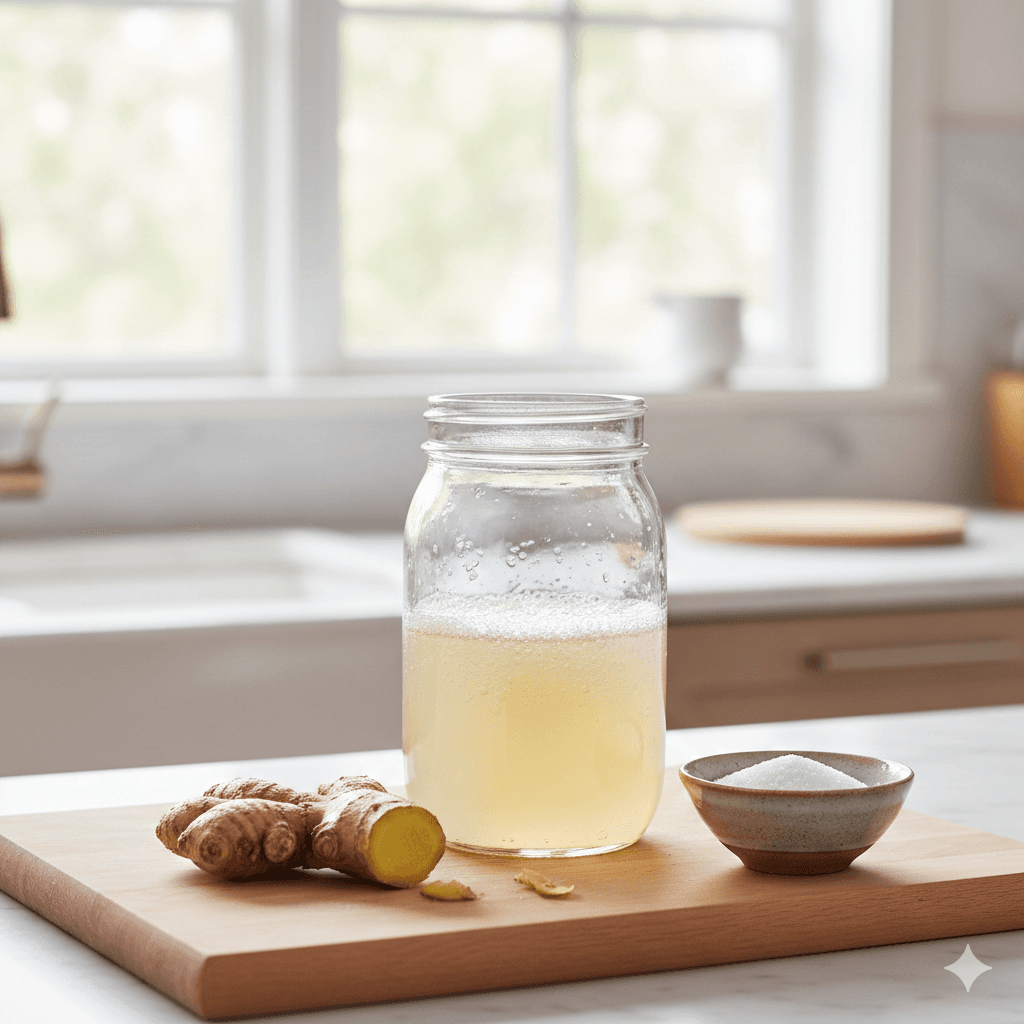
- A quart mason jar. Wide-mouth quart jars are ideal. Easy to clean, easy to strain, and the right size for a standard batch.
- A fine mesh strainer. For separating grains from finished kefir before drinking or bottling.
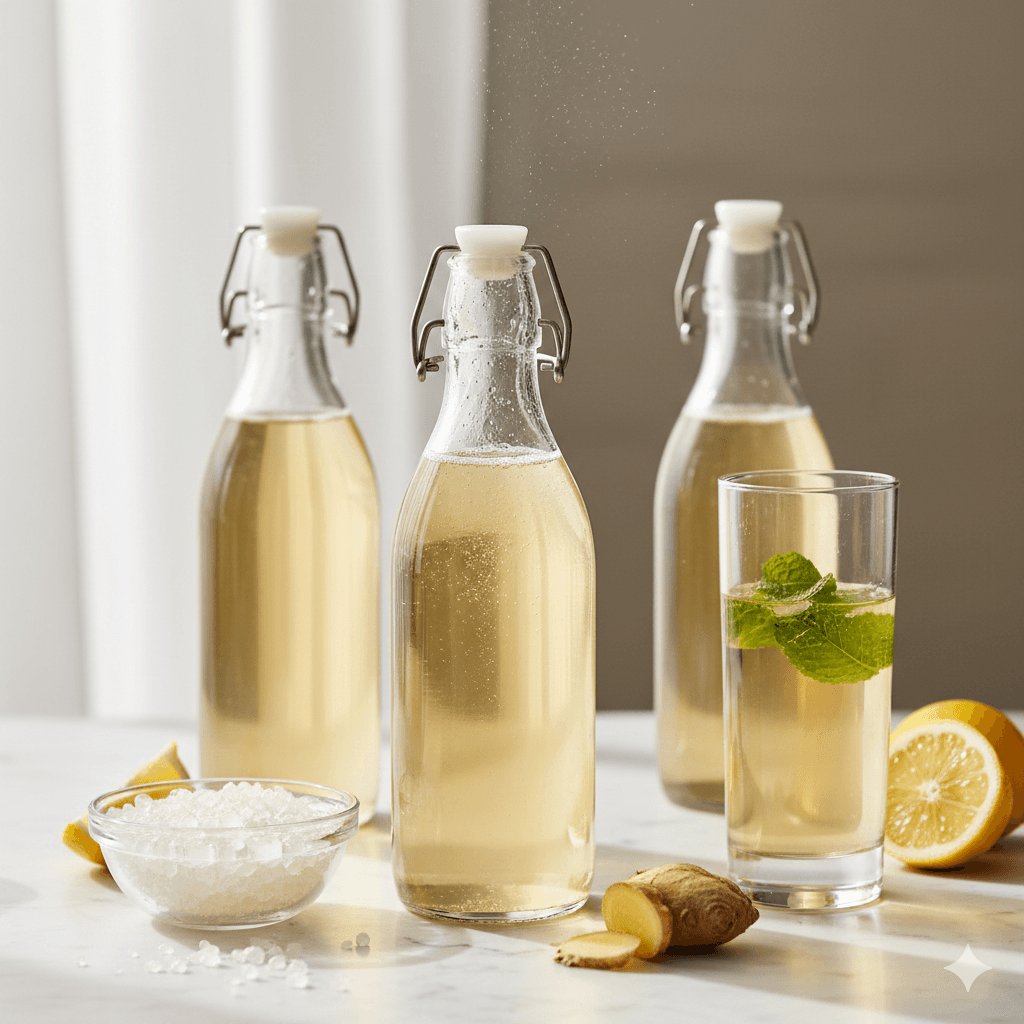
- Swing-top bottles for second fermentation. Optional but highly recommended if you want carbonation.
First Fermentation: Making Water Kefir
The Basic Ratio
For every quart of water, use ¼ cup (50g) of white sugar and 3–4 tablespoons of active water kefir grains. This is the foundation. More grains ferment faster; fewer grains ferment more slowly. In warm weather (75°F+), fermentation completes in closer to 24 hours; in cooler weather, 36 to 48 hours.
Step-by-Step
- Make the sugar water. Dissolve ¼ cup of sugar in a small amount of warm water (not hot — heat can damage the grains). Once dissolved, add filtered water to fill the quart jar. The solution should be at or near room temperature before adding your grains.
- Add a mineral source. Water kefir grains need minerals to stay healthy. Add a pinch of mineral-rich sea salt, a few raisins, a dried fig, or a small piece of eggshell to the jar. This step is often skipped by beginners and causes weak grains over time.
- Add your grains. Gently add the kefir grains to the sugar water. Cover the jar loosely with a cloth or breathable lid — don't seal airtight during first fermentation, as the CO₂ needs to escape.
- Ferment at room temperature. Leave the jar at room temperature — 68–78°F is ideal — for 24 to 48 hours. Swirl gently once or twice during fermentation to keep grains active.
- Taste and strain. Taste the water kefir at 24 hours. It should be less sweet and slightly tangy. If you want more sourness, wait another 12 to 24 hours. Once it's right, strain out the grains through a fine mesh strainer and set them aside for your next batch.
The finished water kefir is mildly sweet, slightly tangy, and lightly fizzy. It can be drunk as-is or taken to another level with a second fermentation.
Second Fermentation: Building Carbonation and Flavor
First fermentation water kefir has light fizz. Second fermentation builds real carbonation and adds flavor. This is the step that turns a pleasant drink into something genuinely exciting.
How to Do a Second Fermentation
Transfer your strained water kefir into swing-top bottles or capped bottles. Add flavoring — see options below — and seal tightly. Leave at room temperature for 12 to 48 hours, depending on how much carbonation you want. The sealed bottle traps the CO₂, building pressure. Refrigerate once carbonated to your liking.
Important: Open bottles carefully over a sink — especially in warm weather. Carbonation can build quickly and the liquid may foam vigorously when opened.
Flavor Ideas for Second Fermentation
- Lemon + ginger. A squeeze of lemon and a few slices of fresh ginger produce a bright, zingy drink reminiscent of a natural ginger beer.
- Berry. A tablespoon of any fresh or frozen berries — blueberries, raspberries, blackberries — adds color, flavor, and natural sweetness.
- Mango + lime. A spoonful of mango puree and a squeeze of lime produce a tropical, summerlike drink.
- Apple + cinnamon. A few tablespoons of fresh apple juice and a cinnamon stick create a fall-flavored kefir with extraordinary carbonation.
- Grape juice. Adding a small amount of 100% grape juice creates purple water kefir with a flavor reminiscent of sparkling grape juice — a crowd-pleasing option for kids.
Caring for Your Water Kefir Grains
Water kefir grains are living cultures that need consistent care. With good maintenance, they multiply and last indefinitely — many fermenters have been using the same grain culture for years.
- Feed them regularly. Don't leave grains sitting in finished kefir. Once you've strained them out, start a new batch immediately or store them in the fridge in sugar water for up to 2 weeks.
- Minerals matter. Consistently add a mineral source (sea salt, dried fruit, eggshell). Grains that don't get minerals become weak and translucent, eventually producing less fizz and breaking apart.
- Never use honey as your primary sugar. Honey has antimicrobial properties that can damage grains over time. Stick to plain white cane sugar for the first fermentation; reserve honey for second fermentation if desired.
- Avoid metal. Plastic and glass are ideal for tools that touch your grains. Metal strainers and spoons can sometimes react with the grains — use plastic or nylon strainers when possible.
Water Kefir vs. Milk Kefir
People often ask how water kefir compares to milk kefir. They're different in every important way:
- Base: Water kefir ferments in sugar water; milk kefir ferments in dairy milk.
- Grains: Different cultures entirely — not interchangeable.
- Flavor: Water kefir is light, mildly sweet, and fruity; milk kefir is tangy, creamy, and more complex.
- Diet: Water kefir is vegan and dairy-free; milk kefir is not.
- Probiotic profile: Both contain beneficial bacteria and yeasts, but the specific strains differ. Neither is definitively "better" — they're different products.
Troubleshooting Water Kefir
Kefir isn't fizzy: Under-fermented (needs more time), or grains are weak from mineral deficiency. Add a mineral source and give it another 12 hours.
Kefir tastes very sweet: Under-fermented. The grains haven't consumed enough sugar yet. Ferment longer, or increase your grain-to-water ratio.
Kefir tastes very sour or alcoholic: Over-fermented. Move to the fridge sooner in your next batch, or reduce fermentation time.
Grains shrinking: Mineral deficiency. Add minerals consistently and switch to filtered water if using tap.
For a broader look at fermented drink options, see our kombucha brewing guide and our ginger bug guide. Water kefir, kombucha, and ginger beer each have their own character — most home fermenters end up making all three.
The most important thing: minerals
Most water kefir problems trace back to mineral deficiency. Add a pinch of mineral-rich sea salt or a few raisins to every batch. This single habit keeps grains healthy, productive, and growing — and produces consistently better water kefir than batches made without it.